
Underscrubs for women can make medical uniforms more comfortable during cool shifts, early mornings, long clinical days, and changing workplace temperatures. Nurses, CNAs, medical assistants, dental workers, veterinary staff, healthcare students, and clinic employees often need a base layer that adds warmth without creating bulk or restricting movement.
A good underscrub should fit smoothly under scrub tops, support shoulder and arm movement, feel breathable, and follow workplace dress code rules. Workers comparing underscrubs for women should evaluate fabric weight, sleeve fit, neckline coverage, stretch, layering comfort, laundering needs, and whether the underscrub works with scrub tops, jackets, or lab coats.
Quick Answer
The best underscrubs for women are soft, breathable, flexible, easy to layer, and comfortable under scrub tops during long shifts. Buyers should check sleeve length, neckline height, fabric stretch, warmth level, fit under scrub tops, workplace color rules, laundering needs, and whether the underscrub supports movement without bunching or overheating.
Healthcare workers choosing women’s underscrubs should review:
- Fabric softness and breathability
- Sleeve length and cuff comfort
- Neckline height and coverage
- Fit under scrub tops
- Stretch and fabric recovery
- Warmth without bulk
- Shoulder and arm mobility
- Layering under jackets or lab coats
- Workplace-approved colors
- Care instructions
- Whether the fabric feels comfortable after several hours
- Return or exchange policy before buying several pieces
Why Underscrubs Matter in Healthcare Workwear
Healthcare settings can shift in temperature throughout the day. One exam room may feel cold, a treatment area may feel warm, and hallways or front-desk spaces may feel different from clinical rooms. An underscrub gives workers a base layer that can improve comfort without changing the main scrub uniform.
Underscrubs may help with:
- Cool exam rooms
- Early morning shifts
- Air-conditioned clinics
- Long hospital shifts
- Dental and veterinary treatment areas
- Seasonal temperature changes
- Extra coverage under scrub tops
- Layering under jackets or lab coats
- Comfort during school clinical rotations
- Professional uniform consistency
The right underscrub should feel like part of the uniform, not like an extra layer that needs constant adjusting.
Fit Should Be Smooth Under Scrub Tops
Fit is one of the most important details when choosing an underscrub. A base layer that is too loose may bunch under scrub tops. A layer that is too tight may restrict movement or feel uncomfortable during long shifts.

A good underscrub should:
- Fit smoothly under scrub tops
- Allow easy arm movement
- Avoid bunching at the shoulders
- Feel comfortable while sitting
- Stay in place while reaching
- Avoid adding too much bulk
- Work under jackets or lab coats
- Maintain coverage during movement
- Follow workplace dress code expectations
Workers comparing the best underscrubs for women should try the layer under the scrub top they normally wear. A base layer that feels fine alone may feel too warm, too tight, or too bulky under another garment.
Sleeve Length Should Match the Role
Underscrubs often come in long-sleeve styles, but sleeve length and cuff fit should still be checked carefully. Sleeves that are too long may interfere with tasks. Sleeves that are too tight may restrict movement. Sleeves that are too loose may bunch under scrub tops or jackets.
A good sleeve fit should:
- Reach comfortably near the wrist
- Avoid covering the hands too much
- Allow bending and reaching
- Fit smoothly under scrub top sleeves
- Avoid tight pulling at the upper arm
- Stay comfortable while writing or charting
- Work with gloves and workplace procedures
- Feel secure without being restrictive
Some workers prefer a closer sleeve fit because it layers smoothly. Others prefer a slightly roomier sleeve for comfort. The right choice depends on body type, scrub top style, and workplace requirements.
Neckline Height Affects Comfort and Coverage
The neckline of an underscrub affects both comfort and appearance. A base layer may show above the scrub top neckline, so workers should consider whether the look follows workplace policy and personal preference.
Common underscrub neckline options include:
- Crew neck
- Round neck
- Mock neck
- Scoop neck
- V-neck-compatible styles
- Higher-coverage base layers
A neckline should feel comfortable throughout the shift. It should not rub, gap, feel too tight, or conflict with the scrub top neckline.
Fabric Softness Matters During Long Shifts
Underscrubs sit directly against the skin, so fabric softness matters. A rough or stiff base layer can become irritating during long shifts, especially when layered under scrub tops, jackets, or lab coats.
Healthcare workers should consider:
- Fabric softness
- Breathable feel
- Stretch and recovery
- Seam placement
- Sleeve comfort
- Neckline comfort
- Fabric weight
- Whether the fabric feels scratchy
- Whether the material feels too warm
- Whether the layer stays comfortable after several hours
A good underscrub should feel comfortable during movement, not only during a quick try-on.
Breathability Helps Prevent Overheating
Warmth is useful, but overheating can become a problem. Healthcare workers may move quickly between tasks, wear jackets, enter warmer rooms, or work in fast-paced patient-care settings. A base layer should provide comfort without trapping too much heat.
Breathable underscrubs may be useful for:
- Long clinical shifts
- Cool but active workplaces
- Dental and veterinary teams
- Healthcare students
- Workers who layer jackets
- Staff moving between warm and cool rooms
- Workers who prefer added coverage without heaviness
Workers comparing women’s underscrubs should look for a balance of warmth, airflow, and comfort. A layer that feels warm at the start of a shift may feel too heavy later if the fabric does not breathe well.
Stretch Supports Clinical Movement
Stretch is important because healthcare workers rarely stay still. An underscrub should move with the worker while reaching, bending, sitting, walking, charting, cleaning rooms, handling supplies, or assisting patients.
Stretch can help during:
- Reaching for supplies
- Sitting and standing
- Bending at the waist
- Moving between exam rooms
- Charting at a workstation
- Dental or veterinary assisting
- Wearing scrub jackets
- Layering under lab coats
- Long shifts with repeated movement
Stretch should also recover well. If the fabric stretches but does not return to shape, the underscrub may feel loose, bunch under scrubs, or look less polished by the end of the shift.
Warmth Should Not Create Bulk
The purpose of an underscrub is usually to add warmth, coverage, or comfort. However, too much bulk can create problems under scrub tops. A bulky base layer may restrict movement, make the scrub top feel tight, or create visible bunching.
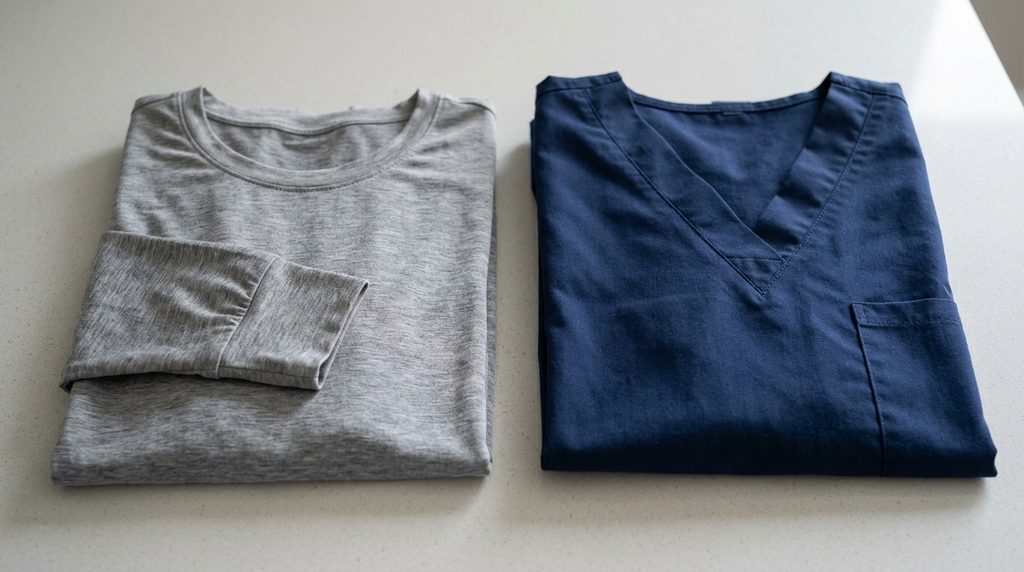
A good underscrub should:
- Add warmth without heaviness
- Fit smoothly under scrub tops
- Avoid thick shoulder bunching
- Keep sleeves from rolling
- Work under jackets when needed
- Maintain a clean uniform appearance
- Stay comfortable while sitting and reaching
Workers should test the full outfit, not just the underscrub alone.
Underscrubs Should Work With Scrub Tops
An underscrub should be chosen with scrub tops in mind. The neckline, sleeve shape, fabric weight, and color should all work with the scrub top worn over it.
Healthcare workers should consider:
- Whether the neckline shows neatly
- Whether sleeves fit under scrub sleeves
- Whether the underscrub color is allowed
- Whether the top feels tight with a base layer
- Whether pockets remain accessible
- Whether the underscrub bunches at the shoulders
- Whether the full uniform looks professional
- Whether the fabric feels too warm when layered
Workers comparing scrub tops with pockets should make sure pockets remain easy to use after layering. A base layer should not make the scrub top feel too tight or make pocket access awkward.
Color Rules Should Be Checked First
Workplace dress codes may apply to underscrubs, especially when sleeves or necklines are visible. Some employers allow only white, black, gray, navy, or a matching scrub color. Others may allow more flexibility.
Before buying underscrubs, healthcare workers should check whether the workplace allows:
- Long sleeves under scrub tops
- Contrast underscrub colors
- Matching underscrub colors
- Mock neck or crew neck layers
- Visible base layers
- Printed or patterned layers
- Jackets instead of underscrubs
- Different rules by department
Buying before checking these rules can lead to returns or layers that cannot be worn at work.
Long Sleeves and Clinical Policies
Long sleeves may be allowed in many settings, but policies vary by workplace, department, task, and infection-control expectations. Workers should follow employer guidance on sleeves, laundering, personal protective equipment, and appropriate clinical attire.
The CDC explains that Standard Precautions are used for all patient care and include infection-prevention practices across healthcare settings. Underscrub use should follow facility policy, garment care labels, and role-specific requirements.
In some areas, long sleeves may be acceptable. In other areas, workers may need to follow stricter rules based on task type, exposure risk, or facility procedures.
Underscrubs vs Scrub Jackets
Underscrubs and scrub jackets both add comfort, but they serve different purposes.
Underscrubs
Underscrubs work as a base layer under a scrub top. They may provide warmth, coverage, and a smoother layered feel without adding an outer garment.
Underscrubs may work well when:
- The worker wants warmth under the top
- The workplace allows visible sleeves
- The shift starts in a cool environment
- The worker does not want an outer jacket
- The base layer needs to stay in place all day
Scrub jackets
Scrub jackets work as removable outer layers. They may provide additional pockets, embroidery placement, and easier temperature control.
Scrub jackets may work well when:
- Temperatures change often
- The worker wants an outer layer that can be removed
- Extra pockets are needed
- Team embroidery is required
- The workplace prefers jacket layers over visible underscrubs
Some workers use both, but the full outfit should still feel comfortable and follow workplace policy.
Underscrubs vs Thermal Layers
Thermal layers may be warmer than standard underscrubs, but they may also be bulkier or too warm for active clinical work. A healthcare worker should choose based on workplace temperature and shift activity.
Standard underscrubs may be better for:
- Mild warmth
- Smooth layering
- Year-round use
- Professional appearance
- Regular clinical movement
Thermal layers may be better for:
- Very cold workplaces
- Outdoor transitions
- Early morning shifts
- Workers who stay in cold areas
- Low-movement roles in cool rooms
However, any base layer worn under scrubs should follow workplace dress code and infection-control expectations.
Layering Under Lab Coats
Some healthcare workers wear underscrubs under scrub tops and then add a lab coat. This can create warmth and coverage, but it can also add bulk if the layers are not chosen carefully.
Workers should check:
- Whether the scrub top still fits smoothly
- Whether the lab coat sleeves feel tight
- Whether the shoulders bunch
- Whether the neckline looks professional
- Whether pockets remain accessible
- Whether the full outfit feels too warm
- Whether the workplace allows the layered look
Layering should improve comfort without making movement harder.
Who Needs Women’s Underscrubs?
Different healthcare roles may need different base-layer features. An underscrub that works well in one setting may not be ideal in another.
Nurses and CNAs
Nurses and CNAs often need comfort, movement, warmth, and practical layering during long shifts.
Helpful features may include:
- Soft fabric
- Stretch sleeves
- Breathable warmth
- Smooth fit under scrub tops
- Easy-care construction
- Workplace-approved colors
Medical assistants
Medical assistants may move between patient intake, vitals, front-office support, rooming, and charting.
Helpful features may include:
- Professional neckline
- Comfortable sleeves
- Lightweight warmth
- Easy layering
- Breathable fabric
- Team-friendly colors
Dental professionals
Dental workers often sit, lean, reach, and work in compact treatment spaces.
Helpful features may include:
- Shoulder flexibility
- Smooth sleeves
- Comfortable seated fit
- Lightweight coverage
- Clean team presentation
Veterinary staff
Veterinary workers may bend, lift, clean, and move quickly during animal care.
Helpful features may include:
- Stretch recovery
- Comfortable base layer
- Easy-care fabric
- Secure sleeve fit
- Practical warmth
- Durable feel
Healthcare students
Students often need school-approved layers for labs, simulations, and clinical rotations.
Helpful features may include:
- Required colors
- Correct fit under scrub tops
- Budget-conscious value
- Easy washing
- Comfortable movement
- Dress-code compliance
Local Try-On Can Help With Layering
Underscrub sizing can vary by brand, fabric, stretch, and cut. Trying on base layers locally can help healthcare workers avoid layers that bunch, pull, feel too warm, or look awkward under scrub tops.
Healthcare workers can review a local medical scrub store profile before planning an in-person fit check.
Local try-on support is useful for:
- First-time underscrub buyers
- Workers switching brands
- Healthcare students
- Staff choosing team colors
- Workers between sizes
- Shoppers comparing sleeve fit
- Buyers checking color in person
- Workers testing layers under scrub tops
Team Uniform Planning With Underscrubs
Healthcare teams may use underscrubs to create a consistent layered look during cooler months. However, visible base layers should be planned carefully so the team remains professional and dress-code compliant.

Team buyers should consider:
- Approved underscrub color
- Whether sleeves may be visible
- Whether colors must match scrub sets
- Size range
- Fabric weight
- Seasonal needs
- Role-specific layering rules
- Jacket alternatives
- Reorder availability
- Return or exchange expectations
A good team layering plan should keep staff comfortable without creating mismatched or noncompliant uniforms.
Care and Laundering Should Be Reviewed
Underscrubs are worn directly against the skin, so they may need frequent washing. Care instructions should be checked before buying multiple pieces.
Before buying, healthcare workers should check:
- Machine-wash instructions
- Drying instructions
- Fabric content
- Whether fabric may shrink
- Whether color may fade
- Whether fabric pills easily
- Whether sleeves hold shape
- Whether the neckline stretches out
- Whether the layer attracts lint or hair
- Whether it remains soft after washing
Easy-care underscrubs are useful for workers who keep several scrub sets and base layers in weekly rotation.
How to Compare Women’s Underscrubs
No underscrub is right for every healthcare worker. The best choice depends on workplace temperature, role, fabric preference, scrub top fit, and dress code.
Before buying, ask:
- Does the fabric feel soft against the skin?
- Does the underscrub fit smoothly under scrub tops?
- Does the sleeve length feel comfortable?
- Does the neckline work with the scrub top?
- Does the fabric stretch enough for movement?
- Does the layer feel breathable?
- Does the color meet workplace policy?
- Does the underscrub feel too warm?
- Does it work under jackets or lab coats?
- Will it support team uniform needs?
The right underscrub should work during a full shift, not only during a quick try-on.
Common Mistakes When Buying Women’s Underscrubs
Choosing warmth before breathability
A warm layer may feel comfortable at first but become too hot during active clinical work.
Ignoring sleeve fit
Sleeves that are too tight, too long, or too bulky can become distracting during the shift.
Buying before checking dress code
Some workplaces restrict visible underscrub colors, sleeve length, or long sleeves in certain settings.
Forgetting to test under scrub tops
An underscrub should be tried on under the scrub top normally worn at work.
Overlooking neckline compatibility
A neckline that looks fine alone may not pair well with a V-neck or Y-neck scrub top.
Buying several before washing one
Testing one underscrub through a wash cycle can help confirm shrinkage, softness, and shape retention.
Final Checklist Before Buying Women’s Underscrubs
Before choosing underscrubs for women, healthcare workers should confirm:
- Workplace-approved color
- Correct underscrub size
- Sleeve length
- Cuff comfort
- Neckline compatibility
- Fabric softness
- Fabric stretch
- Breathability
- Warmth level
- Smooth layering under scrub tops
- Jacket or lab coat compatibility
- Care instructions
- Return or exchange policy
- Team uniform needs, if applicable
Underscrubs should help healthcare workers stay comfortable, covered, and professional during changing workplace temperatures. The best option should fit smoothly under scrubs, support movement, follow workplace rules, and remain practical after repeated wear.
FAQs
What are underscrubs for women?
Underscrubs for women are base-layer tops worn underneath scrub tops. They can add warmth, coverage, comfort, and smoother layering during cool shifts or changing workplace temperatures. They should fit smoothly under scrubs without bunching or restricting movement.
Are underscrubs good for long clinical shifts?
Underscrubs can be helpful during long shifts when they are soft, breathable, flexible, and not too bulky. The best underscrub should add comfort without overheating, pulling under the scrub top, or interfering with normal clinical movement.
What should healthcare workers look for in women’s underscrubs?
Healthcare workers should look for soft fabric, breathable warmth, comfortable sleeves, stretch, neckline compatibility, smooth layering under scrub tops, workplace-approved colors, and easy-care construction. The layer should remain comfortable after several hours of movement.
Can underscrubs be worn under any scrub top?
Underscrubs can work under many scrub tops, but neckline, sleeve fit, fabric weight, and color should be checked first. Workers should make sure the base layer does not bunch, feel too tight, or violate workplace dress code rules.
Should healthcare workers try on underscrubs before buying several?
Trying on is helpful because underscrubs must fit under scrub tops and support movement. A try-on can confirm sleeve comfort, neckline compatibility, warmth level, shoulder movement, and whether the layer feels smooth during sitting, reaching, and walking.