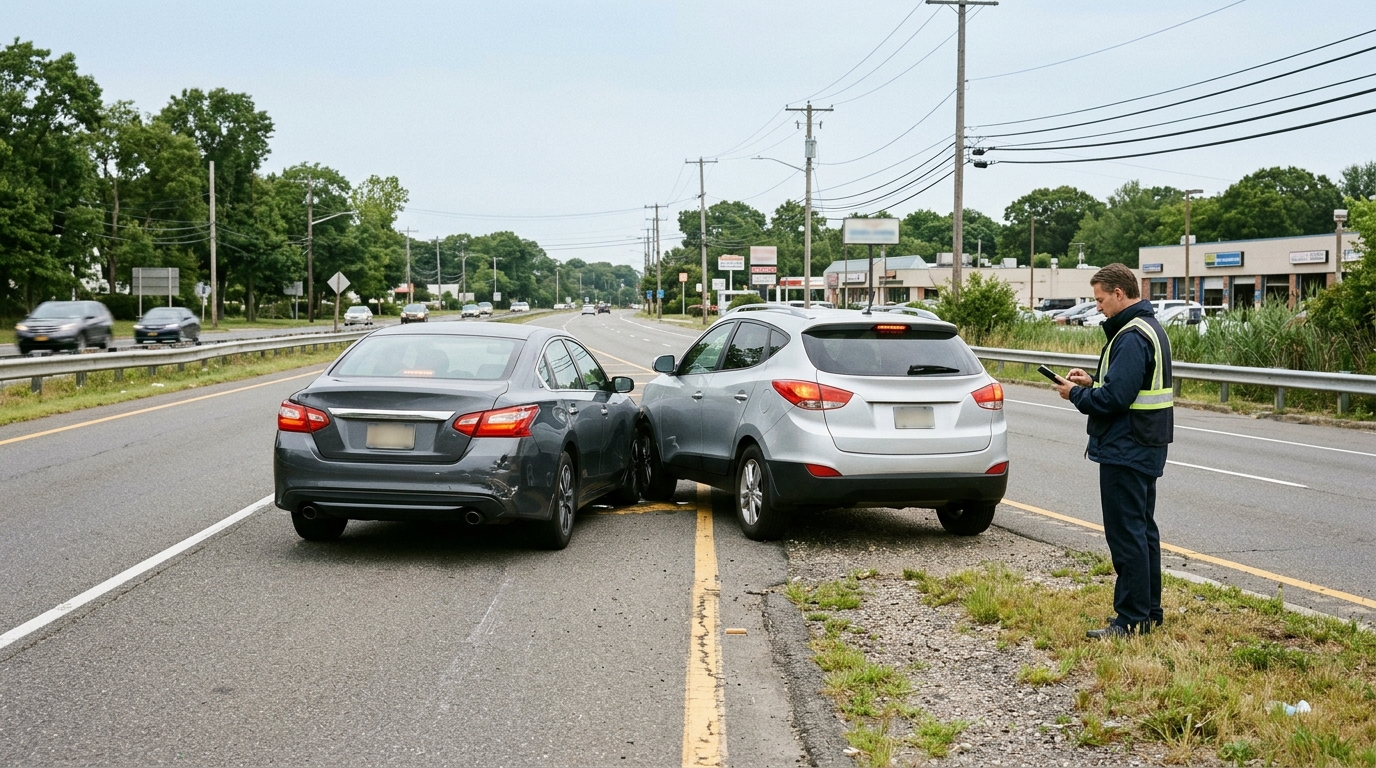
Car accident claims in New York involve specific insurance requirements, liability rules, medical evidence, and legal deadlines that can significantly affect an injured person’s ability to recover compensation. Whether a collision occurs on the Long Island Expressway, a residential street, or a busy New York City intersection, understanding the applicable legal framework is essential.
New York operates a no-fault automobile insurance system that provides qualifying benefits for certain medical expenses and lost earnings regardless of who caused the accident. However, no-fault benefits are different from a personal injury lawsuit against a negligent driver. Recovering compensation for pain and suffering generally requires meeting additional statutory requirements.
Major legislative changes effective May 26, 2026, also revised how certain New York car accident lawsuits are evaluated. These changes affect the legal definition of serious injury, comparative negligence, and noneconomic damages in specified circumstances.
A car accident claim therefore requires more than reporting the collision to an insurance company. It may involve establishing negligence, documenting injuries, identifying available coverage, preserving evidence, and complying with multiple deadlines.
Quick Answer
How do car accident claims work in New York?
New York car accident claims generally involve two separate forms of recovery:
- No-fault insurance benefits: Eligible injured people may receive up to $50,000 in basic economic benefits for qualifying medical treatment, lost earnings, and certain additional expenses, regardless of who caused the collision.
- Personal injury liability claims: An injured person may pursue compensation from a negligent driver or another responsible party for legally recoverable damages. In covered motor vehicle cases, pain and suffering generally require proof of a serious injury under Insurance Law § 5102(d).
New York also applies comparative negligence rules when the injured person contributed to the accident. For covered motor vehicle personal injury actions commenced on or after May 26, 2026, recovery may be barred when the claimant’s fault exceeds the combined fault of the defendants.
Most ordinary car accident personal injury lawsuits have a three-year filing period, but no-fault insurance notices, government-related claims, and other procedures can have much shorter deadlines.
Key Takeaways
- New York Is a No-Fault State: Basic no-fault benefits generally provide up to $50,000 per eligible injured person for qualifying economic losses.
- No-Fault Does Not Cover Everything: Pain and suffering, vehicle repairs, and certain other losses require separate evaluation.
- Negligence Must Be Proven: A liability claim generally requires evidence that another party breached a legal duty and caused the injury.
- Serious-Injury Rules Apply: Covered motor vehicle lawsuits seeking noneconomic damages generally require proof of a qualifying serious injury.
- The Law Changed in 2026: The former 90/180-day serious-injury category was eliminated for actions commenced on or after May 26, 2026.
- Comparative Fault Can Bar Recovery: Under the revised rule for covered motor vehicle personal injury cases, a claimant whose fault exceeds the defendants’ combined fault cannot recover.
- Insurance Coverage Matters: Liability, uninsured motorist, and supplementary underinsured motorist coverage may provide different recovery options.
- Early Deadlines Are Important: Qualifying crashes generally must be reported to the DMV within 10 days, and no-fault claims generally require written notice within 30 calendar days.
- Evidence Determines the Outcome: Police reports, photographs, video recordings, medical documentation, and witness statements may establish liability and damages.
What Is a Car Accident Claim in New York?
A car accident claim is a request for insurance benefits or legal compensation arising from injuries or property damage caused by a motor vehicle collision.
Different claims may arise from the same accident.
For example, an injured driver may seek no-fault benefits from the appropriate insurance carrier while separately pursuing a liability claim against the motorist who caused the collision.
What Is a No-Fault Insurance Claim?
A no-fault claim seeks payment for qualifying basic economic losses under New York’s automobile insurance system.
The claimant generally does not need to prove that another driver was negligent to qualify for covered benefits.
However, eligibility, documentation, treatment requirements, and policy limitations still apply.
What Is a Bodily Injury Liability Claim?
A bodily injury liability claim seeks compensation based on the legal responsibility of another driver or party.
The insurer may investigate whether its insured caused the accident and whether the injuries satisfy the requirements for compensation.
Such claims can involve medical costs beyond basic no-fault benefits, pain and suffering, and other legally recognized losses.
What Is a Property Damage Claim?
A property damage claim concerns damage to a vehicle or other property.
Potential expenses may include vehicle repairs or replacement, towing, and other covered losses.
Property damage is generally evaluated separately from no-fault personal injury benefits.
Can Several Claims Arise From One Collision?
Yes.
A single accident may involve:
- No-fault medical benefits
- No-fault lost earnings
- Bodily injury liability
- Property damage liability
- Collision insurance
- Uninsured motorist benefits
- Supplementary underinsured motorist benefits
- Other applicable insurance coverage
The availability of each claim depends on the accident and policy.
What Types of Car Accidents Can Lead to Injury Claims?
New York car accident claims arise from many different collision types.
The legal investigation depends on how the crash occurred and which parties may have caused it.
Rear-End Collisions
Rear-end collisions occur when one vehicle strikes the back of another.
These crashes may involve following too closely, distracted driving, inadequate stopping distance, or other factors.
Under New York law, a rear-end collision with a stopped or stopping vehicle generally establishes a prima facie case of negligence against the rear driver.
However, the rear driver may offer a legally sufficient nonnegligent explanation.
Intersection Accidents
Intersection collisions may involve failures to yield, prohibited turns, red-light violations, or driver inattention.
Traffic signals, road markings, witness accounts, and video recordings can be important evidence.
Head-On Collisions
Head-on crashes may occur when a driver crosses a centerline, enters oncoming traffic, or loses control.
The investigation may involve road conditions, impairment, distraction, vehicle defects, and other circumstances.
Sideswipe and Lane-Change Accidents
A sideswipe may result from unsafe lane changes, improper merging, or failure to monitor surrounding traffic.
Relevant evidence may include vehicle damage patterns, roadway markings, and witness observations.
Multi-Vehicle Accidents
Collisions involving three or more vehicles can create complicated liability questions.
Several drivers may share responsibility, or one driver’s negligence may trigger a sequence of impacts.
A separate evaluation of each vehicle’s movements may be necessary.
Hit-and-Run Accidents
A hit-and-run occurs when a driver leaves an accident scene without complying with applicable legal obligations.
These claims may involve police investigations, uninsured motorist coverage, and specialized notification procedures.
Distracted Driving Accidents
Distraction may involve cellphone use, navigation systems, conversations, or other activities that interfere with driving.
The claimant must establish that the distraction contributed to the collision.
Commercial Vehicle Accidents
Collisions involving trucks, delivery vehicles, taxis, or other commercial vehicles may involve additional defendants.
Depending on the circumstances, the employer, vehicle owner, maintenance provider, or another party may face legal responsibility.
What Should Someone Do Immediately After a Car Accident?
The immediate priorities are safety, medical evaluation, and appropriate reporting.
Evidence preservation should not delay emergency care.
1. Move to Safety When Possible
If the collision creates an immediate danger, take appropriate steps to avoid further harm.
Do not move a seriously injured person unnecessarily unless required to address an immediate threat.
2. Call Emergency Services
Contact 911 when someone is injured or emergency assistance is needed.
Police and emergency responders may help secure the scene and document the incident.
3. Obtain Medical Evaluation
Some injuries are immediately apparent, while others may require further testing.
A person experiencing head trauma, breathing difficulty, severe pain, confusion, weakness, or other concerning symptoms should obtain prompt medical care.
4. Exchange Relevant Information
When safe, obtain:
- Driver names
- Contact information
- Vehicle registration information
- License plate numbers
- Insurance information
- Vehicle descriptions
- Names of passengers and witnesses
Avoid confrontations or unsupported accusations about fault.
5. Photograph the Scene
Useful photographs may include:
- Vehicle damage
- Vehicle positions
- Road conditions
- Traffic signals
- Skid marks
- Debris
- Intersection layout
- Weather conditions
- Visible injuries, when appropriate
Do not enter active traffic or other unsafe locations to obtain photographs.
6. Identify Witnesses
Independent witnesses may provide information about the collision sequence.
Contact information should be preserved when possible.
7. Notify the Appropriate Insurer
The relevant insurance provider should receive timely notice under the applicable policy and legal requirements.
A no-fault claim may require notice to a different insurer from the one handling a liability claim.
8. Keep Medical and Financial Records
Preserve treatment summaries, prescriptions, bills, employment documentation, and other records connected to the accident.
9. Preserve Electronic Evidence
Potential evidence may include dashboard camera footage, nearby surveillance recordings, and relevant vehicle data.
Some electronic records may be overwritten or lost.
10. Identify Applicable Deadlines
The DMV reporting requirement, no-fault notice period, uninsured motorist conditions, and lawsuit deadline are separate obligations.
When Must a New York Car Accident Be Reported?
New York imposes reporting requirements for qualifying motor vehicle accidents.
The applicable obligations depend on the injuries and property damage.
When Is a Police Report Required?
A collision involving injuries or death should be reported to law enforcement as required by New York law.
Reporting requirements may also apply in other circumstances.
What Is the DMV’s 10-Day Rule?
A driver generally must submit Form MV-104 to the New York Department of Motor Vehicles within 10 days when an accident causes:
- Death
- Personal injury
- More than $1,000 in damage to the property of any one person
The DMV filing is separate from notifying the insurance company.
Does a Police Report Replace the DMV Filing?
Not necessarily.
A police officer may prepare a separate report, but the involved driver’s own reporting obligation may still apply.
What If the Driver Is Too Injured to File?
Applicable rules provide procedures for qualifying circumstances in which the driver cannot personally complete the report.
The situation should be addressed promptly.
The New York DMV’s accident reporting guidance explains the requirements.
How Does the New York No-Fault Insurance System Work?
New York’s no-fault insurance system, also called Personal Injury Protection (PIP), provides qualifying economic benefits without requiring an initial determination that another driver was responsible.

It is designed to help eligible injured people obtain certain treatment and financial benefits following motor vehicle accidents.
Who Is Generally Eligible for No-Fault Benefits?
Depending on the accident and coverage, eligible people may include:
- Drivers of insured vehicles
- Passengers
- Pedestrians struck by covered motor vehicles
- Certain cyclists injured by motor vehicles
- Other qualifying injured people
The responsible insurer depends on the person’s status, the vehicle involved, and applicable priority rules.
How Much Does Basic No-Fault Coverage Provide?
Standard basic no-fault coverage generally provides up to $50,000 per eligible injured person for combined qualifying economic losses.
This is a combined limit rather than $50,000 for each separate benefit category.
What Medical Expenses May Be Covered?
Qualifying expenses may include:
- Emergency care
- Hospital treatment
- Surgery
- Diagnostic testing
- Prescription medications
- Physical therapy
- Occupational therapy
- Rehabilitation
- Other medically necessary covered services
Payment is subject to the applicable no-fault regulations, fee schedules, and coverage provisions.
How Are Lost Earnings Calculated?
Basic no-fault benefits generally cover 80% of qualifying lost earnings, up to $2,000 per month for a maximum of three years.
Applicable statutory offsets and the overall coverage limit may affect payment.
What Additional Expenses May Be Covered?
No-fault benefits may reimburse certain reasonable and necessary expenses, up to $25 per day for a maximum of one year.
Examples may include qualifying transportation costs associated with treatment or necessary household assistance.
Does No-Fault Cover Pain and Suffering?
No.
No-fault benefits generally address qualifying economic losses.
Pain and suffering require separate evaluation under applicable liability law.
Does No-Fault Cover Vehicle Repairs?
No.
Vehicle repairs and other property damage are generally handled through collision insurance or property damage liability coverage.
For a more detailed explanation of eligibility, benefit categories, and filing procedures, the New York no-fault insurance system is an important starting point for understanding how economic benefits differ from a negligence lawsuit.
What Are the New York No-Fault Insurance Deadlines?
New York has strict procedural requirements for obtaining no-fault benefits.
Several deadlines may apply to the same accident.
| Requirement | General Deadline |
| Initial Written No-Fault Notice | Within 30 calendar days after the accident |
| Submission of Medical Bills | Generally within 45 days after treatment |
| Submission of Lost Earnings Claims | Generally within 90 days after the loss |
| Insurer Payment or Denial | Generally within 30 calendar days after receiving required proof, including properly requested verification |
Exceptions may apply under the governing regulations.
What Is the Initial 30-Day Notice Requirement?
An eligible injured person generally must submit written notice to the appropriate no-fault insurer as soon as reasonably practicable, but no later than 30 calendar days after the accident.
Late notice may be excused in certain circumstances when a clear and reasonable written justification is provided.
What Is the 45-Day Medical Billing Requirement?
Written proof of qualifying medical expenses generally must be submitted within 45 days after the services are provided.
Medical providers may submit qualifying bills directly to the insurer.
What Is the 90-Day Lost Earnings Requirement?
Claims involving qualifying lost earnings and certain additional expenses generally require submission of supporting proof within 90 days after the loss or expense.
When Must an Insurer Pay?
No-fault benefits generally become overdue if the insurer does not pay or deny the claim within the applicable 30-day period after receipt of the required proof, including properly requested verification.
What if Benefits Are Denied?
Depending on the circumstances, a claimant may pursue no-fault arbitration, court proceedings, or an appropriate regulatory complaint.
The New York Department of Financial Services’ no-fault insurance FAQs explain the principal deadlines and benefit procedures.
Who Does Not Qualify for Ordinary No-Fault Benefits?
Not every person injured in a motor vehicle incident qualifies for standard no-fault coverage.
Exclusions and eligibility rules are important.
Motorcycle Operators and Passengers
New York generally excludes motorcycle operators and passengers from ordinary no-fault benefits.
However, a pedestrian struck by a motorcycle may be treated differently.
Owners of Uninsured Vehicles
An owner who fails to maintain legally required insurance may be excluded from benefits under applicable circumstances.
Certain Intoxication-Related Accidents
Some exclusions concern drivers whose impairment contributed to the accident.
Special rules preserve certain emergency healthcare payments while allowing specified recovery rights against the impaired driver.
Intentional Injury and Certain Criminal Conduct
No-fault exclusions may also apply in specified circumstances involving intentional injury or particular criminal conduct.
Does an Exclusion Eliminate Every Legal Claim?
Not necessarily.
The absence of no-fault eligibility does not automatically resolve whether a separate negligence claim or another form of insurance coverage may be available.
The precise circumstances and governing rules must be examined.
How Is Fault Determined After a New York Car Accident?
A liability claim generally requires evidence that another party acted negligently and caused the collision.
Ordinary negligence usually involves four elements.
| Legal Element | Required Showing |
| Duty of Care | The defendant owed an applicable legal duty |
| Breach | The defendant failed to exercise reasonable care |
| Causation | The breach was a proximate cause of the accident and injury |
| Damages | The claimant suffered legally compensable losses |
Driver Duty of Care
Drivers generally must operate their vehicles with reasonable care under the circumstances.
Relevant obligations include obeying traffic signals, maintaining control, keeping a proper lookout, and following applicable right-of-way requirements.
Breach of Duty
Potential breaches may involve:
- Speeding
- Driving while distracted
- Running a red light
- Following too closely
- Failing to yield
- Making an unsafe turn
- Negligently changing lanes
- Driving while impaired
- Failing to maintain control
A traffic violation may be important evidence, but causation must still be established.
Causation
The claimant must establish a sufficient connection between the negligent conduct and the accident.
For example, a driver’s cellphone use may be relevant if distraction caused the driver to miss a traffic signal.
Damages
The claimant must demonstrate legally recoverable injuries or losses.
Medical and financial evidence may be necessary.
Are Rear-End Collisions Automatically the Rear Driver’s Fault?
Not in every case.
However, New York courts generally recognize an inference of negligence when a moving vehicle strikes another vehicle that is stopped or stopping.
What Does the Rear-End Presumption Mean?
A rear-end collision with a stopped or stopping vehicle generally establishes a prima facie case of negligence against the rear driver.
The rear driver must then provide a legally sufficient nonnegligent explanation to rebut the inference.
What Explanations May Be Considered?
Potential explanations may involve:
- An unexpected mechanical failure
- A sudden and unexplained stop
- An unavoidable emergency
- Another vehicle abruptly entering the lane
- Other circumstances supported by evidence
An explanation is not automatically accepted merely because it is asserted.
Suqilanda v. Fresh Meadow Mechanical Corp. (2026)
In Suqilanda v. Fresh Meadow Mechanical Corp., decided July 8, 2026, the Appellate Division, Second Department considered a rear-end collision on the Long Island Expressway.
The plaintiff’s vehicle was stopped in response to traffic conditions.
A truck operated by one defendant struck the vehicle from behind.
The appellate court concluded that the plaintiff established the rear driver’s negligence and her own freedom from comparative fault.
The defendants’ argument concerning the stop did not create a sufficient factual dispute.
The court granted partial summary judgment on liability and dismissed the comparative negligence defense.
The ruling demonstrates why a rear-end collision may support liability when the opposing party cannot establish a sufficient nonnegligent explanation.
It did not determine the ultimate amount of damages.
The official decision in Suqilanda provides the court’s reasoning.
Can More Than One Driver Be Responsible for a Collision?
Yes.
A collision may have several contributing causes.
For example, one driver may make an unsafe lane change while another fails to maintain an appropriate following distance.
How Is Responsibility Allocated?
The evidence may establish the percentage of legally attributable fault assigned to each relevant party.
This can affect recovery under New York’s comparative negligence rules.
What if Three Vehicles Are Involved?
A multi-vehicle crash may involve several impacts.
The investigation should establish the sequence and determine which negligent actions contributed to the injuries.
What if an Emergency Vehicle Was Involved?
Claims involving emergency vehicles may be governed by additional Vehicle and Traffic Law provisions.
For qualifying emergency operations, Vehicle and Traffic Law § 1104 may alter the ordinary negligence standard for particular conduct.
The specific circumstances matter.
What if Another Driver Fled?
The unavailable driver may complicate identification and insurance recovery.
Uninsured motorist or other applicable coverage may become important.
What Is Comparative Negligence in New York Car Accident Claims?
Comparative negligence determines how an injured person’s own legally attributable fault affects compensation.
New York significantly changed this rule for certain motor vehicle cases in 2026.
What Was the General Rule?
Under CPLR § 1411(a), New York generally uses proportional comparative fault.
Under that rule, a claimant’s percentage of responsibility reduces recoverable damages rather than automatically barring recovery.
What Changed on May 26, 2026?
New York added CPLR § 1411(b), establishing a modified comparative negligence rule for personal injury actions subject to Insurance Law Article 51.
Under the new provision, recovery is barred if the claimant’s fault exceeds that of the defendant or the combined fault of the defendants against whom recovery is sought.
The amendment applies to actions and proceedings commenced on or after May 26, 2026.
How Does the Rule Work?
| Claimant’s Fault | Defendants’ Combined Fault | General Result for a Covered Article 51 Injury Claim |
| 0% | 100% | Fault does not reduce recovery |
| 20% | 80% | Damages generally reduced by 20% |
| 40% | 60% | Damages generally reduced by 40% |
| 50% | 50% | Not barred solely because fault is equal |
| 60% | 40% | Recovery barred |
| 75% | 25% | Recovery barred |
The table addresses comparative fault only. It does not establish whether a serious injury exists or whether other requirements are satisfied.
Does the New Rule Apply to Property Damage?
The new subsection specifically concerns personal injury actions subject to Insurance Law Article 51.
Property damage and other claims outside its scope require separate analysis.
What if the Accident Happened Before May 26, 2026?
The law’s applicability turns on when the action or proceeding was commenced, not solely the accident date.
A collision that occurred before May 26, 2026, may therefore be affected if the covered action was commenced on or after that date.
The current CPLR § 1411 establishes the revised comparative fault framework.
What Is New York’s Serious-Injury Threshold?
New York Insurance Law § 5102(d) defines serious injury for qualifying motor vehicle lawsuits.
The threshold is particularly important when an injured person seeks compensation for pain and suffering.
Which Injuries May Qualify?
Under the current statute, serious injury includes:
- Death
- Dismemberment
- Significant disfigurement
- A fracture
- Loss of a fetus
- Permanent loss of use of a body organ, member, function, or system
- Permanent consequential limitation of use of a body organ or member
- Significant limitation of use of a body function or system
The claimant must establish the applicable category through appropriate evidence.
What Changed in 2026?
Effective May 26, 2026, the New York Legislature removed the former 90/180-day category from the statutory definition.
That category previously addressed certain medically determined nonpermanent injuries or impairments preventing an individual from performing substantially all customary daily activities for at least 90 of the first 180 days after an accident.
The revised law applies to actions and proceedings commenced on or after May 26, 2026.
Does a Fracture Qualify?
A fracture is one of the statutory categories.
However, the claimant must still establish that the accident caused the fracture and that another party bears legal responsibility.
Does a Disc Herniation Automatically Qualify?
No.
An MRI showing a disc abnormality does not automatically establish a serious injury.
Some categories require proof of a significant or permanent functional limitation.
Medical causation may also be disputed.
What About Soft Tissue Injuries?
Soft tissue injuries may qualify when the medical evidence establishes one of the remaining statutory categories.
However, the former 90/180-day category should not be treated as available for newly commenced covered actions after the reform.
What About Permanent Scarring?
A qualifying significant disfigurement may satisfy the statute.
However, not every visible scar necessarily meets the legal standard.
The injury’s appearance and other circumstances matter.
Must Fault Be Determined Before Serious Injury?
Under the revised Insurance Law § 5104(a), the trier of fact must determine the party or parties at fault before determining whether the injury satisfies the statutory serious-injury requirement.
The revised sequence applies to covered actions commenced on or after May 26, 2026.
What Do New York Courts Say About Serious-Injury Evidence?
Medical evidence plays a central role in disputes about whether an injury satisfies the statutory threshold.
Courts distinguish between a diagnosis and proof of legally significant limitation.
Toure v. Avis Rent A Car Systems, Inc. (2002)
In Toure v. Avis Rent A Car Systems, Inc., the New York Court of Appeals addressed the evidentiary proof necessary to establish certain serious-injury categories.
The Court recognized that objective medical findings and appropriately supported qualitative or quantitative assessments may be important.
A claimant must provide evidence that satisfies the applicable statutory category.
Pommells v. Perez (2005)
In Pommells v. Perez, the Court of Appeals examined medical causation and the effect of treatment gaps, intervening medical problems, and preexisting conditions.
The decision established that such factors can affect whether evidence adequately connects the injury to the accident.
However, a gap in care does not automatically defeat a claim when an adequate explanation exists.
Perl v. Meher (2011)
In Perl v. Meher, the Court of Appeals rejected a rigid requirement that quantitative range-of-motion measurements must always be taken immediately after the accident.
The decision recognized that an initial qualitative assessment may be supported by later clinical findings.
Why Do These Cases Matter?
The decisions demonstrate that:
- A diagnosis alone may be insufficient.
- Objective medical findings may be important.
- The relevant statutory category determines the required proof.
- Preexisting conditions do not automatically defeat a claim.
- Treatment gaps may require explanation.
- Qualified medical opinions can help establish causation and functional limitations.
These decisions were issued under earlier versions of the relevant law. Their reasoning should be applied consistently with the 2026 statutory amendments.
What Evidence Is Important in a New York Car Accident Claim?
Evidence may establish both the circumstances of the collision and the resulting injuries.
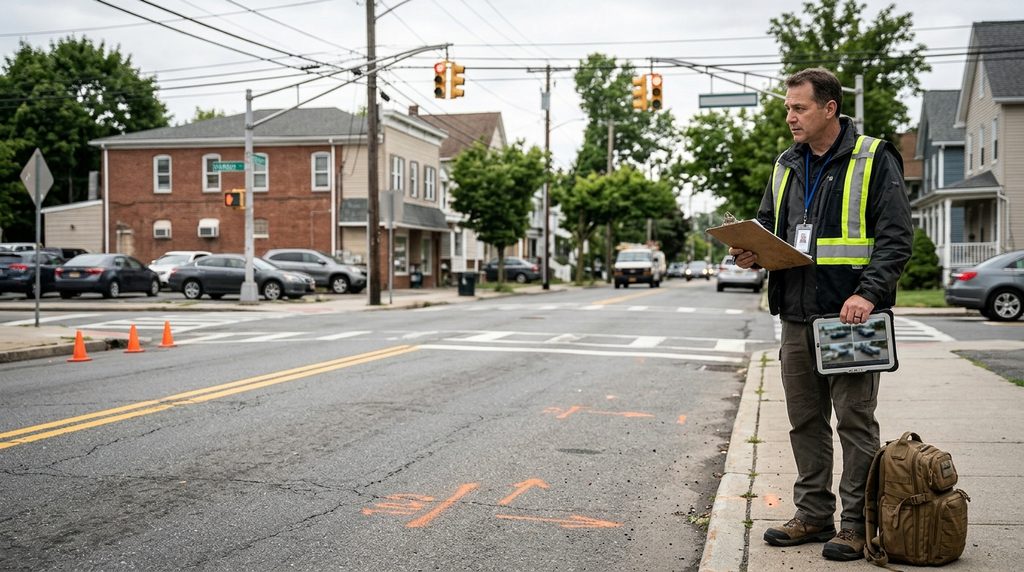
Different records answer different legal questions.
| Evidence | Potential Purpose |
| Police Crash Report | Identifies the accident, parties, and initial reported circumstances |
| Vehicle Photographs | Documents damage and impact locations |
| Roadway Photographs | Shows traffic controls, markings, and conditions |
| Dashboard Camera Footage | May establish driver behavior and collision sequence |
| Nearby Surveillance Video | May show the accident or preceding events |
| Witness Statements | Provides independent accounts |
| Vehicle Data | May contain relevant operational information |
| Medical Records | Documents injuries and treatment |
| Diagnostic Imaging | Supports particular medical findings |
| Specialist Reports | May establish causation and prognosis |
| Employment Records | Documents qualifying lost income |
| Medical Bills | Establishes treatment-related expenses |
| Insurance Policies | Identifies potentially applicable coverage |
| Expert Reports | Addresses accident reconstruction or specialized medical issues |
Police Reports
A police report may provide useful information about the accident.
However, statements within the report may have different evidentiary value depending on their source.
The report does not automatically establish every legal element.
Vehicle Damage
Damage patterns may help identify impact locations.
However, the extent of visible damage does not always establish the severity of the injuries.
Surveillance and Dashboard Cameras
Video may help determine traffic signal conditions, vehicle movement, or whether a driver failed to yield.
Original recordings should be preserved when available.
Medical Records
Medical records may establish the diagnosis, treatment, and recovery.
They may also become important when an insurer disputes medical causation.
Accident Reconstruction
Some complicated collisions require reconstruction by a qualified expert.
The analysis may involve photographs, measurements, physical evidence, vehicle data, and other reliable information.
How Are Insurance Companies Involved in a Car Accident Claim?
Insurance companies may investigate liability, coverage, medical causation, and damages.
The process depends on the type of claim.
No-Fault Claims
A no-fault insurer generally evaluates eligibility, covered treatment, medical necessity, and supporting proof.
Liability Claims
A bodily injury liability insurer may examine whether its insured was negligent and what damages are recoverable.
Property Damage Claims
Vehicle repair or replacement claims may involve inspection, repair estimates, coverage limits, and the value of the property.
Settlement Offers
An insurer may make an offer based on its evaluation of liability, medical evidence, coverage, and litigation risk.
A settlement offer is not necessarily the same as the full amount a claimant believes is recoverable.
What if the Insurer Disputes the Injury?
The insurer may question whether the accident caused a diagnosed condition or whether the statutory serious-injury threshold is met.
Medical records and expert opinions may be important.
Does Insurance Negotiation Extend the Lawsuit Deadline?
Not automatically.
An ongoing claim or negotiation generally does not suspend the statute of limitations.
What Happens When the At-Fault Driver Is Uninsured?
An uninsured driver may lack the legally required liability insurance.
The injured person’s available options depend on the circumstances and applicable coverage.
Uninsured Motorist Coverage
New York requires qualifying automobile policies to include uninsured motorist coverage with minimum bodily injury protection.
This coverage may apply when an insured person is injured by an uninsured or qualifying hit-and-run motorist.
What Are the Minimum Limits?
New York’s required uninsured motorist protection generally matches the minimum bodily injury liability limits of $25,000 per person and $50,000 per accident for qualifying injuries.
Higher limits may be available under appropriate coverage arrangements.
What Is MVAIC?
The Motor Vehicle Accident Indemnification Corporation may provide qualifying no-fault and bodily injury protection to eligible people who lack another applicable source of coverage.
Strict eligibility and notice requirements apply.
What About Hit-and-Run Accidents?
Unidentified drivers may create additional reporting requirements.
For MVAIC eligibility, the accident generally must be reported to an appropriate authority within 24 hours, and the required notice of intention may need to be submitted within 90 days for qualifying hit-and-run claims.
Other policy-based uninsured motorist claims may have different notice requirements.
The MVAIC eligibility guidance explains its requirements.
What Is Supplementary Uninsured/Underinsured Motorist Coverage?
Supplementary Uninsured/Underinsured Motorists coverage, commonly called SUM, may provide additional protection when the responsible driver’s liability insurance is insufficient or other qualifying conditions apply.
How Does Underinsured Motorist Coverage Work?
An at-fault driver may carry liability insurance with limits below the damages suffered by the claimant.
SUM coverage may provide additional compensation under the injured person’s applicable policy.
Does SUM Automatically Pay the Difference?
No.
Payment depends on the policy, applicable coverage limits, liability, damages, and required procedures.
SUM coverage may also contain offsets for amounts paid under the responsible driver’s liability coverage.
Why Are Policy Limits Important?
New York’s minimum required liability limits may be insufficient for a severe injury.
Higher available coverage can affect potential sources of compensation.
What Documents Matter?
Relevant information may include:
- The claimant’s automobile policy
- SUM endorsement
- At-fault driver’s insurance
- Liability limits
- Settlement information
- Accident and medical records
Are There Special Notice Requirements?
Yes.
SUM endorsements may contain conditions concerning notice, settlement consent, and other procedures.
Those conditions should be reviewed before settling with the at-fault driver’s insurer.
What Are New York’s Minimum Automobile Insurance Requirements?
New York generally requires registered motor vehicles to maintain specified minimum insurance protections.
Minimum Coverage Overview
| Insurance Coverage | General Minimum |
| Bodily Injury Liability — One Person | $25,000 |
| Bodily Injury Liability — Two or More People | $50,000 per accident |
| Death Liability — One Person | $50,000 |
| Death Liability — Two or More People | $100,000 per accident |
| Property Damage Liability | $10,000 per accident |
| Basic No-Fault Benefits | $50,000 per eligible person |
| Required Uninsured Motorist Coverage | Generally 25,000/50,000 for qualifying New York bodily injury claims |
These are minimum limits rather than recommended coverage amounts.
Can Additional Insurance Be Purchased?
Yes.
Consumers may obtain higher bodily injury liability limits and qualifying supplementary coverage.
Available options depend on the insurer and policy.
Does the Minimum Insurance Limit Determine Damages?
No.
The amount of legally recoverable damages may exceed available insurance.
Coverage and damages are separate questions.
The New York Department of Financial Services’ automobile insurance consumer guide provides the state’s coverage framework.
Can a Passenger File a Car Accident Claim?
Yes.
A passenger injured in a collision may have access to qualifying no-fault benefits and potentially a separate liability claim.
Which Insurer Provides No-Fault Benefits?
For many accidents in New York, the no-fault insurer of the vehicle occupied by the passenger is responsible.
Special rules may apply to buses and other circumstances.
Can a Passenger Sue the Driver of the Vehicle They Occupied?
Potentially, yes.
If that driver was negligent and the applicable legal requirements are satisfied, the passenger may have a liability claim.
Can Multiple Drivers Be Responsible?
Yes.
The actions of multiple drivers may have contributed to the accident.
The claim may involve several insurers or defendants.
Does the Passenger Have to Prove Serious Injury?
In covered cases seeking noneconomic damages, the statutory serious-injury requirement may apply.
The passenger’s status does not automatically eliminate it.
How Do Pedestrian and Bicycle Accident Claims Work?
Pedestrians and cyclists may be injured by negligent drivers.
The claims can involve no-fault eligibility, liability, and serious-injury requirements.
Pedestrian Accidents
A pedestrian struck by a qualifying motor vehicle may be eligible for no-fault benefits through the appropriate insurer.
A separate personal injury claim may involve the driver’s negligence.
Bicycle Accidents
A cyclist struck by a covered motor vehicle may qualify for no-fault benefits under applicable rules.
The collision may also support a liability claim when negligence is established.
What Evidence Matters?
Relevant evidence may include:
- Crosswalk markings
- Traffic signals
- Bicycle lane markings
- Vehicle positions
- Surveillance footage
- Witness testimony
- Medical documentation
Can the Pedestrian or Cyclist Be Partly at Fault?
Potentially.
Comparative fault may arise from legally attributable conduct.
The applicable rules depend on whether the action falls within the specific statutory framework.
How Do Rideshare and Commercial Vehicle Accidents Differ?
Some accidents involve vehicles used for commercial transportation or delivery.
The available insurance and potential defendants may differ from an ordinary private passenger car claim.
Rideshare Accidents
Rideshare coverage may depend on whether the driver was using the platform, had accepted a ride, or was transporting a passenger at the time.
Different policies and statutory requirements may apply.
Taxi Accidents
Taxi passenger injuries may involve commercial insurance and liability issues concerning the driver or vehicle owner.
Delivery Vehicle Accidents
A negligent delivery driver may create questions about an employer’s potential responsibility.
The employment relationship and whether the driver was acting within the scope of employment can matter.
Commercial Truck Accidents
Truck collisions may require review of driver practices, maintenance records, loading procedures, and federal or state commercial transportation requirements.
Does Every Commercial Accident Involve Employer Liability?
No.
Employer or company liability depends on the relevant legal relationship and circumstances.
What Compensation May Be Available After a New York Car Accident?
Potential compensation depends on the injury, legal claim, available evidence, and applicable statutory restrictions.
Medical Expenses
Qualifying expenses may include:
- Emergency treatment
- Hospitalization
- Surgery
- Medication
- Diagnostic imaging
- Physical therapy
- Rehabilitation
- Future medical care
Some expenses may be payable through no-fault insurance.
Other recoverable losses may be addressed through a liability claim.
Lost Earnings
An injury may prevent someone from working or reduce working hours.
Medical restrictions and financial records may support the claim.
Reduced Earning Capacity
Some injuries create long-term limitations affecting employment.
Future income losses generally require medical and financial support.
Pain and Suffering
Applicable liability claims may permit compensation for physical pain and other noneconomic harm.
The serious-injury requirement may restrict recovery in covered cases.
Emotional Distress
Certain accident-related psychological injuries may be recoverable when supported by the applicable legal theory and evidence.
Permanent Disability
Long-term functional impairment may affect medical needs, earning capacity, and daily living.
Wrongful Death
When legally actionable conduct causes death, an authorized representative may pursue a wrongful death claim.
The applicable damages rules differ from those governing an ordinary personal injury action.
Are There New Limits on Pain-and-Suffering Damages in 2026?
Yes, but only for narrowly defined circumstances.
New York’s 2026 motor vehicle reforms added Insurance Law § 5104(d).
What Is the $100,000 Cap?
The provision imposes a $100,000 cap on noneconomic damages for certain at-fault injured drivers who are not already barred under the revised comparative fault rule.
Which Drivers May Be Affected?
The provision concerns specified circumstances involving an at-fault injured person who:
- Operated an uninsured motor vehicle that the person was responsible for insuring, subject to the statutory lapse exception
- Operated a vehicle while impaired and was convicted of the qualifying offense
- Operated a motor vehicle during the commission of a felony or immediate flight and was convicted of the qualifying felony
Additional statutory requirements apply.
Does the Cap Apply to Every Car Accident Victim?
No.
It is not a universal limitation on pain and suffering damages.
It applies only when the statutory conditions are satisfied.
Does the Cap Apply to Fatal Injuries?
No.
The provision expressly excludes actions involving injuries resulting in death.
When Did the Change Take Effect?
The relevant 2026 reforms took effect May 26, 2026, and apply to actions and proceedings commenced on or after that date.
How Is the Value of a Car Accident Claim Calculated?
There is no single formula for determining the value of a New York car accident claim.
Potential compensation depends on the legally established damages and the evidence supporting liability.
What Factors Affect Value?
Common factors include:
- Medical expenses
- Injury severity
- Permanent impairment
- Future treatment
- Lost income
- Reduced earning capacity
- Pain and suffering
- Comparative fault
- Insurance coverage
- Medical causation disputes
- Statutory restrictions
Why Do Similar Injuries Produce Different Outcomes?
Two people with similar diagnoses may experience different medical consequences.
For example, one person may return to work quickly while another requires prolonged treatment.
The legal claims may also involve different fault percentages and insurance coverage.
Does a Serious Injury Guarantee a High Settlement?
No.
A serious injury may satisfy an important statutory requirement, but legal responsibility and damages must still be established.
Does a Settlement Equal the Amount the Claimant Receives?
Not necessarily.
Attorney fees, litigation expenses, and legally applicable reimbursement obligations may affect net recovery.
The actual deductions depend on the agreement and relevant law.
What Happens During the Car Accident Claim Process?
A typical claim may involve investigation, medical evaluation, insurance communication, negotiation, and potentially litigation.
Stage 1: Initial Reporting
The accident is reported to the appropriate authorities and insurers.
Stage 2: Medical Evaluation
Healthcare professionals diagnose injuries and recommend treatment.
Stage 3: Evidence Preservation
Relevant records, photographs, video, and witness information are identified.
Stage 4: Insurance Coverage Review
Available no-fault, liability, uninsured motorist, and other coverage is evaluated.
Stage 5: Liability Investigation
The parties examine whether another driver or responsible party was negligent.
Stage 6: Medical and Damages Evaluation
Treatment, prognosis, income losses, and other damages are reviewed.
Stage 7: Settlement Negotiations
A claimant may present a demand and supporting evidence.
The insurer may accept, deny, or counter the proposal.
Stage 8: Filing a Lawsuit
When appropriate, a civil action is commenced before the legal deadline expires.
Stage 9: Discovery and Motions
The parties may exchange documents, conduct depositions, present expert evidence, and seek court rulings.
Stage 10: Settlement or Trial
The dispute may resolve through agreement or proceed to trial.
Not every case reaches every stage.
How Do Insurance Companies Evaluate Car Accident Settlements?
Insurance companies commonly assess liability, medical causation, damages, and available coverage.
Liability Review
The insurer examines whether its insured caused the collision.
Medical Review
The insurer may investigate whether the accident caused the claimed injuries.
Serious-Injury Evaluation
In covered cases, the insurer may dispute whether the claimant satisfies Insurance Law § 5102(d).
Comparative Fault
The insurer may consider the claimant’s legally attributable responsibility.
The revised 2026 rule may significantly affect certain covered claims.
Coverage Limits
The insurer determines which policies apply and the available limits.
Settlement Risk
The insurer may consider the likelihood of a different outcome through litigation.
Why Might an Offer Be Low?
Potential reasons include disputed fault, incomplete medical records, preexisting conditions, uncertain future treatment, or limited coverage.
A low offer does not automatically establish unlawful claims-handling conduct.
How Long Does Someone Have to File a Car Accident Lawsuit in New York?
Different deadlines apply to different parts of a car accident claim.
The ordinary three-year lawsuit period does not replace earlier reporting and insurance requirements.
Deadline Overview
| Requirement or Claim | General Deadline |
| DMV Crash Report, When Required | Within 10 days |
| Written No-Fault Notice | Generally within 30 calendar days |
| No-Fault Medical Bill Proof | Generally within 45 days after treatment |
| No-Fault Lost Earnings Proof | Generally within 90 days after the loss |
| Ordinary Personal Injury Lawsuit | Generally three years under CPLR § 214(5) |
| Certain Municipal Tort Claims | Notice of claim generally within 90 days |
| Covered Municipal Injury Lawsuits | Generally one year and 90 days |
| Wrongful Death | Generally two years after death |
| Certain Claims Involving Minors | CPLR § 208 may extend the period |
| MVAIC Hit-and-Run Claims | Special police-reporting and notice requirements |
What Is the Ordinary Personal Injury Filing Period?
Under CPLR § 214(5), ordinary personal injury negligence actions generally have a three-year filing period.
What if a Government Vehicle Is Involved?
Certain lawsuits involving municipalities or public corporations require a timely notice of claim.
General Municipal Law § 50-e generally imposes a 90-day notice requirement for covered tort claims.
Other entities may have different rules.
What if the Injured Person Is a Minor?
CPLR § 208 may extend certain filing periods for a minor’s own claim.
However, specialized notice requirements may still apply.
What if Someone Died From the Collision?
A qualifying wrongful death action generally must be commenced within two years after death under EPTL § 5-4.1.
Additional legal requirements and exceptions may apply.
Does Negotiating With an Insurer Stop the Deadline?
Not automatically.
An insurance claim and a civil lawsuit are different processes.
The claimant must ensure that applicable legal deadlines are met even when settlement discussions continue.
What Mistakes Can Weaken a New York Car Accident Claim?
Several mistakes may affect medical recovery, insurance benefits, or liability evidence.
These include:
- Failing to seek necessary medical attention
- Not reporting an injury accident appropriately
- Missing the DMV’s 10-day reporting deadline
- Overlooking the 30-day no-fault notice requirement
- Failing to identify the correct insurer
- Not preserving accident photographs
- Losing witness contact information
- Allowing dashboard camera footage to be overwritten
- Failing to retain medical records
- Overlooking diagnostic findings
- Ignoring relevant preexisting conditions
- Making unsupported statements about fault
- Assuming a rear-end collision automatically resolves every legal issue
- Confusing no-fault benefits with a liability claim
- Assuming the former 90/180-day serious-injury category remains available for newly commenced covered actions
- Applying the old comparative negligence rule without considering the 2026 amendments
- Overlooking uninsured or underinsured motorist coverage
- Settling a liability claim without reviewing applicable SUM conditions
- Claiming unsupported future medical expenses
- Signing a release without understanding its scope
- Missing a municipal notice or lawsuit deadline
The significance of each issue depends on the individual case.
When May Legal Guidance Be Useful After a Car Accident?
Legal guidance may be particularly important when a collision causes serious injuries, permanent limitations, substantial medical expenses, or disputed liability.

Some cases also involve complicated questions about no-fault benefits, the serious-injury threshold, multiple responsible drivers, uninsured motorist coverage, or government-operated vehicles.
The 2026 legislative reforms make accurate classification especially important because the filing date and statutory framework can affect the available legal remedies.
A person researching a car accident lawyer New York may consider whether the practice handles motor vehicle negligence, medical causation disputes, and insurance coverage issues under current New York law.
People researching a personal injury lawyer Long Island may also consider experience with collisions involving Nassau County, Suffolk County, and surrounding New York roadways.
Legal representation does not guarantee any particular settlement or verdict. Every claim depends on the applicable law, medical evidence, liability facts, and available insurance.
Frequently Asked Questions About New York Car Accident Claims
How does no-fault insurance work after a New York car accident?
New York no-fault insurance generally provides qualifying basic economic benefits regardless of which driver caused the accident. Standard basic coverage is usually limited to $50,000 per eligible injured person and may include medical treatment, partial lost earnings, and certain additional expenses. Written notice generally must be submitted within 30 calendar days, subject to applicable exceptions.
Can someone sue for pain and suffering after a car accident in New York?
Yes, when the legal requirements are satisfied. In covered motor vehicle cases, the injured person generally must prove a serious injury under Insurance Law § 5102(d). Qualifying categories include fractures, significant disfigurement, and certain permanent or significant functional limitations. Liability and medical causation must also be established.
Can I recover compensation if I was partly at fault for a New York car accident?
Potentially. For covered motor vehicle personal injury actions commenced on or after May 26, 2026, recovery is barred when the claimant’s fault exceeds the defendants’ combined fault. If the claimant is not barred, damages may be reduced proportionally. Claims outside the revised rule may follow different comparative fault principles.
What happens if the driver who caused the accident has no insurance?
An injured person may have a claim under applicable uninsured motorist coverage. Supplementary coverage or MVAIC benefits may also be available in qualifying circumstances. However, these claims have specific eligibility, notice, and coverage requirements. Hit-and-run accidents can involve especially short reporting deadlines.
How long do I have to file a car accident injury claim in New York?
Ordinary personal injury lawsuits generally have a three-year filing period, but insurance and reporting deadlines may arise much sooner. Qualifying collisions must generally be reported to the DMV within 10 days, and no-fault claims generally require written notice within 30 days. Claims involving public entities, wrongful death, or specialized coverage may have different requirements.
Conclusion
Car accident claims in New York involve several distinct legal and insurance processes. No-fault benefits provide qualifying economic protection without requiring an initial determination of negligence, while personal injury liability claims generally require evidence that another party caused legally compensable harm.
The distinction becomes particularly important when an injured person seeks compensation for pain and suffering. Covered motor vehicle cases generally require proof of a serious injury as defined by Insurance Law § 5102(d).
The legislative changes effective May 26, 2026, significantly affect certain car accident lawsuits. The former 90/180-day serious-injury category was eliminated for newly commenced covered actions, modified comparative negligence rules may bar recovery when a claimant’s fault exceeds the defendants’ combined fault, and a narrowly defined noneconomic damages cap applies in specified circumstances.
Evidence remains central to the claim. Police reports, photographs, surveillance recordings, vehicle data, witness statements, medical records, and financial documentation can help establish liability and damages.
Insurance coverage also requires careful review. No-fault, bodily injury liability, uninsured motorist, and supplementary underinsured motorist protection provide different forms of potential recovery.
Finally, filing deadlines should be identified immediately after the accident. The general three-year personal injury limitations period does not replace earlier DMV, no-fault, uninsured motorist, or government-related requirements.
Understanding New York’s current car accident laws, insurance procedures, serious-injury requirements, available compensation, and filing deadlines can help injured people evaluate potential claims using reliable evidence and the correct legal framework.