
Insurance policy limits can strongly affect how a New York personal injury claim is evaluated, negotiated, and resolved. Even when injuries are serious and liability appears clear, the amount of available insurance may influence settlement strategy, recovery options, lien review, and whether additional responsible parties should be investigated. People reviewing these issues may use a personal injury lawyer Long Island resource to understand how damages, insurance coverage, liability, and settlement value are generally evaluated.
Quick Answer
Insurance policy limits are the maximum amounts an insurer may pay under a specific policy for a covered claim. In a New York personal injury claim, policy limits may affect settlement value, negotiation strategy, available recovery, and whether other insurance sources should be investigated. However, policy limits are not the same as the full value of the injury. A claim may be worth more than the available insurance, and multiple policies or defendants may need to be reviewed.
Key Takeaways
- Policy limits set the maximum amount an insurance company may pay under a covered policy.
- New York minimum auto liability limits are commonly referred to as 25/50/10, meaning $25,000 for bodily injury to one person, $50,000 for bodily injury to two or more people, and $10,000 for property damage. Department of Financial Services
- New York basic no-fault coverage generally provides up to $50,000 per person for economic losses such as medical expenses, lost earnings, and certain other reasonable and necessary expenses. Department of Financial Services
- Policy limits do not automatically equal settlement value. Liability, injuries, damages, evidence, coverage defenses, liens, and available defendants still matter.
- Supplemental uninsured/underinsured motorist coverage may become important when an at-fault driver has no insurance or insufficient bodily injury limits. Department of Financial Services
- New York law allows certain liability policy limit disclosure requests before litigation and insurance disclosure during litigation. NYSenate.gov
- A complete insurance review may include primary policies, excess policies, umbrella policies, commercial policies, homeowners policies, business policies, no-fault coverage, SUM coverage, and self-insurance.
What Are Insurance Policy Limits?
Insurance policy limits are the maximum amounts an insurance company agrees to pay for a covered claim under the policy. These limits are usually listed on the policy declarations page and may vary depending on the type of coverage.
Policy limits may apply to:
- Bodily injury liability
- Property damage liability
- No-fault benefits
- Supplemental uninsured/underinsured motorist coverage
- Homeowners liability
- Renters liability
- Business liability
- Commercial auto coverage
- Excess liability
- Umbrella coverage
- Medical payments coverage
- Professional liability coverage
- Self-insured retention programs
A personal injury claim may involve one policy or several policies. The available coverage depends on the accident type, responsible parties, insurance terms, exclusions, and facts of the claim.
Why Policy Limits Matter
Policy limits matter because they may affect how much money is practically available from an insurer. A case may involve severe injuries, strong liability evidence, and high damages, but if the available insurance is low, settlement options may be limited unless additional coverage or responsible parties exist.
Policy limits can affect:
- Settlement negotiations
- Policy limit demand strategy
- Litigation decisions
- Whether additional defendants should be investigated
- Whether excess or umbrella coverage exists
- Whether SUM coverage applies
- Whether liens can be resolved
- Whether a judgment can be collected
- Whether mediation is useful
- Whether future damages can be fully recovered
A policy limit does not determine what an injury is worth. It determines what a specific insurance policy may pay if the claim is covered.
Policy Limits vs. Claim Value
Claim value and policy limits are not the same thing. Claim value is based on the strength of liability, injury severity, medical records, wage loss, pain and suffering, future care, permanency, comparative fault, and other evidence. Policy limits are the amount of available insurance coverage under a policy.
For example, a claim may involve:
- $250,000 in damages with only $25,000 in available coverage
- $50,000 in damages with $300,000 in available coverage
- Severe injuries with multiple possible insurance policies
- Serious medical bills but disputed liability
- Clear liability but limited insurance
- Multiple injured people sharing one per-accident limit
A claim can be worth more than available insurance. A claim can also settle below policy limits if liability, causation, damages, or coverage is disputed.
Per-Person and Per-Accident Limits
Many liability policies use separate per-person and per-accident limits. The per-person limit is the maximum amount available for one injured person. The per-accident limit is the maximum amount available for all injured people from the same accident.
For example, an auto policy with 25,000/50,000 bodily injury limits may mean:
- Up to $25,000 for one injured person
- Up to $50,000 total for all injured people in the accident
If three people are injured, they may have to share the total per-accident limit. This can make settlement more complicated when multiple claims compete for limited insurance.
New York Auto Liability Policy Limits
Auto accident claims are one of the most common situations where policy limits matter. New York’s Department of Financial Services explains that the minimum third-party bodily injury liability limits required by New York law are $25,000 for bodily injury to one person, $50,000 for bodily injury to two or more people, and $10,000 for property damage, often called 25/50/10. Department of Financial Services
These minimum limits can be too low for serious injuries involving:
- Surgery
- Fractures
- Permanent limitations
- Lost income
- Future medical care
- Serious scarring
- Brain injuries
- Spinal injuries
- Multiple injured people
- Wrongful death claims
A car accident attorney resource may help explain why no-fault benefits, bodily injury liability limits, serious injury issues, and other insurance coverage often need to be reviewed together after a crash.
No-Fault Coverage and Policy Limits
New York no-fault coverage is different from bodily injury liability coverage. No-fault benefits generally pay certain economic losses regardless of who caused the accident. New York DFS explains that basic no-fault coverage provides up to $50,000 per person for economic losses such as medical expenses, lost earnings, and certain other reasonable and necessary expenses related to injuries from the use or operation of a motor vehicle.
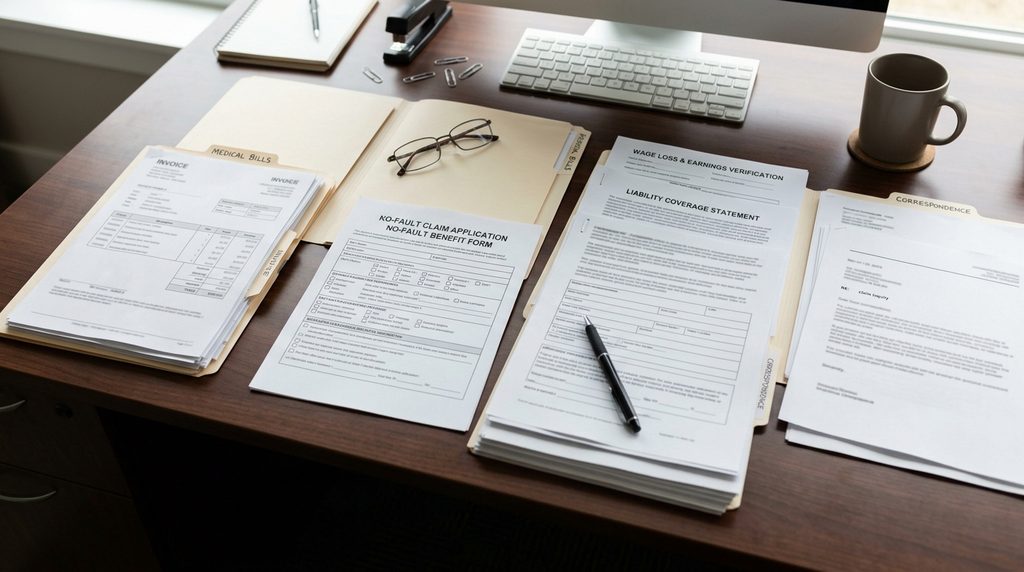
No-fault benefits may apply to:
- Medical bills
- Lost earnings
- Prescription expenses
- Transportation to medical care
- Certain other reasonable and necessary expenses
No-fault benefits do not usually pay pain and suffering. Pain and suffering is generally pursued through a bodily injury claim against an at-fault party when the legal requirements are met.
What Happens When No-Fault Benefits Are Exhausted?
When basic no-fault benefits are used up, the injured person may need to look at other sources of payment. DFS states that when basic no-fault benefits are consumed, a person may apply for Additional PIP benefits if available, use standard health insurance for medical expenses, or potentially seek other benefits depending on the facts. Department of Financial Services
After no-fault benefits are exhausted, important questions may include:
- Is Additional PIP available?
- Is Optional Basic Economic Loss coverage available?
- Will health insurance pay remaining treatment?
- Are medical liens developing?
- Is there a bodily injury claim?
- Was the injury serious enough to pursue pain and suffering?
- Is SUM coverage available?
- Are there multiple liable parties?
Policy limits can affect both the immediate medical payment process and the broader personal injury recovery.
Serious Injury and Liability Claims
In many New York auto accident cases, an injured person must meet the serious injury requirement to sue another driver for pain and suffering. DFS explains that a person may sue another driver for pain and suffering only if the injured person sustained a “serious injury” as defined by Insurance Law. Department of Financial Services
This means an auto accident claim may involve two separate insurance questions:
- What no-fault benefits are available for economic losses?
- What liability insurance is available if a serious injury claim can be pursued?
The available liability policy limit may become especially important when medical records show fractures, surgery, permanent limitations, significant limitations, or long-term disability.
Supplemental Uninsured and Underinsured Motorist Coverage
Supplemental uninsured/underinsured motorist coverage, often called SUM coverage, may become important when the at-fault driver has no insurance or does not have enough bodily injury coverage. DFS explains that SUM coverage may apply when another vehicle has no insurance or has bodily injury liability limits lower than the injured person’s own coverage.
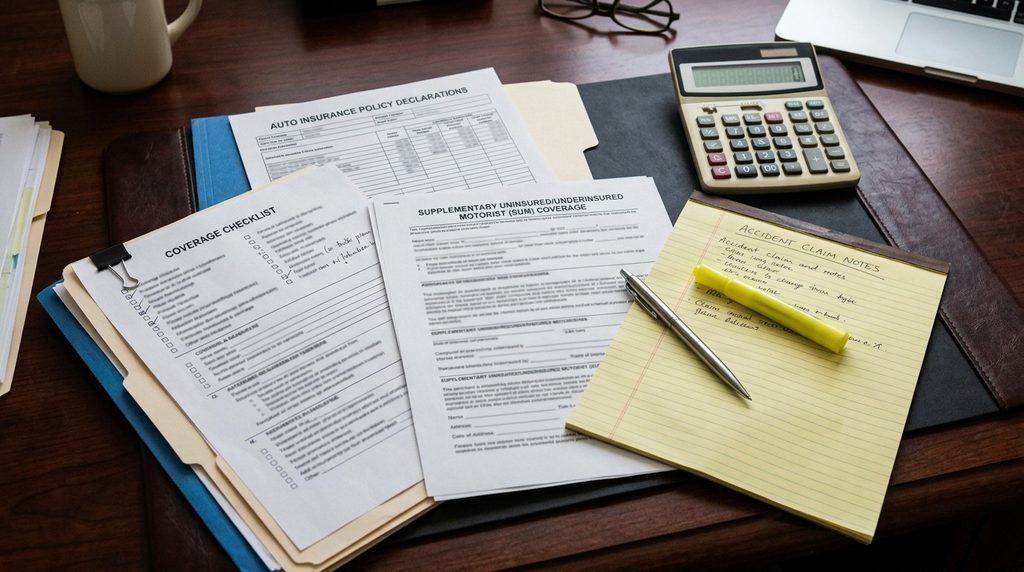
SUM coverage may matter in claims involving:
- Hit-and-run crashes
- Uninsured drivers
- Drivers with minimum limits
- Serious injuries exceeding available liability limits
- Multiple injured people sharing one policy
- Out-of-state accidents
- Household coverage questions
SUM coverage is policy-specific. The policy language, limits, offsets, notice requirements, and exhaustion rules should be reviewed carefully.
Policy Limits in Truck and Commercial Vehicle Claims
Truck and commercial vehicle claims may involve higher insurance limits than standard private auto claims, but coverage still depends on the specific policy, vehicle, employer, driver status, cargo, company structure, and accident facts.
Commercial vehicle insurance may involve:
- Primary commercial auto coverage
- Excess coverage
- Umbrella coverage
- Motor carrier coverage
- Employer liability coverage
- Broker or shipper coverage
- Rental vehicle coverage
- Cargo-related coverage
- Self-insurance
- Multiple business entities
A serious truck accident may require early investigation into all possible insurance sources. A single police report may not identify every available policy.
Policy Limits in Premises Liability Claims
Premises liability claims may involve homeowners insurance, renters insurance, landlord insurance, commercial general liability coverage, business insurance, property management coverage, or umbrella insurance. The applicable policy depends on where the injury occurred and who controlled the property.
Premises liability policy limits may matter in claims involving:
- Slip and fall accidents
- Trip and fall accidents
- Snow and ice injuries
- Unsafe stairs
- Poor lighting
- Broken sidewalks
- Parking lot hazards
- Falling merchandise
- Unsafe apartment buildings
- Store or restaurant injuries
- Marina or dock hazards
A premises liability attorney resource may help explain why property control, notice, maintenance records, and insurance coverage often need to be reviewed together.
Policy Limits in Construction Accident Claims
Construction accident claims may involve multiple policies because many parties can be involved in one jobsite. The injured worker may have workers’ compensation benefits, but third-party claims may involve owners, general contractors, subcontractors, equipment companies, or other responsible parties.
Construction insurance may involve:
- Workers’ compensation coverage
- General liability coverage
- Contractor policies
- Subcontractor policies
- Owner-controlled insurance programs
- Contractor-controlled insurance programs
- Excess policies
- Umbrella policies
- Equipment rental coverage
- Commercial auto coverage
- Indemnity agreements
A construction accident attorney resource may help readers understand why jobsite contracts, safety records, insurance documents, and third-party liability evidence often matter after a construction injury.
Policy Limits in Dog Bite Claims
Dog bite claims may involve homeowners insurance, renters insurance, landlord coverage, umbrella policies, or business liability coverage if the bite happened at a commercial property. However, some policies may contain exclusions or restrictions for certain dogs, prior incidents, business use, or intentional conduct.
Dog bite coverage questions may include:
- Does the dog owner have homeowners or renters insurance?
- Did the incident happen at home, in public, or at a business?
- Was the dog excluded from the policy?
- Was there prior notice of aggression?
- Is umbrella coverage available?
- Are there multiple responsible parties?
- Did a landlord, property owner, or business contribute to the risk?
A dog bite lawyer resource may help explain why owner information, animal control records, insurance coverage, and injury evidence may all affect these claims.
Policy Limits in Nursing Home Negligence Claims
Nursing home negligence claims may involve professional liability coverage, general liability coverage, corporate insurance, facility-level policies, management company policies, or self-insurance arrangements. The structure may be more complicated than an ordinary accident claim.
Insurance questions may involve:
- Which entity operated the facility?
- Was there a management company?
- Was professional liability coverage available?
- Was general liability coverage available?
- Were there excess policies?
- Was the facility self-insured?
- Were staffing companies involved?
- Were outside vendors involved?
- Did a separate medical provider contribute to the harm?
A nursing home negligence lawyer Long Island resource may help readers understand why facility records, corporate structure, care documentation, and insurance coverage can all matter.
Policy Limits in Boating and Watercraft Claims
Boating accident claims may involve watercraft insurance, homeowners insurance, marina policies, rental company insurance, charter boat coverage, commercial marine policies, umbrella coverage, or business liability coverage. Coverage depends on ownership, use, location, vessel type, and policy terms.
Boating insurance questions may include:
- Who owned the boat?
- Was the vessel rented?
- Was the vessel used commercially?
- Did a marina contribute to the accident?
- Was a dock or property hazard involved?
- Was the operator insured?
- Were passengers covered?
- Was umbrella coverage available?
- Were alcohol or safety violations alleged?
A boating accident lawyer Long Island resource may help explain why vessel ownership, operator conduct, marina records, and policy review may all affect recovery.
Multiple Defendants and Multiple Policies
Policy limits become especially important when more than one person or business may be responsible. Multiple defendants may mean multiple insurance policies.
Multiple coverage sources may exist when:
- Two drivers contributed to a crash.
- A vehicle owner and driver are different people.
- A driver was working at the time of the accident.
- A contractor and subcontractor were involved.
- A property owner and management company both had control.
- A business created a hazard on another party’s property.
- A nursing home used outside vendors.
- A marina, boat owner, and operator all played roles.
- A defective product contributed to the injury.
A complete claim review should not stop with the first insurance policy identified.
Excess and Umbrella Insurance
Excess and umbrella policies may provide additional coverage above the primary policy. These policies are often important in serious injury claims because the primary policy may not be enough.
Excess or umbrella coverage may exist for:
- High-net-worth individuals
- Businesses
- Commercial vehicles
- Construction companies
- Property owners
- Landlords
- Nursing homes
- Marina operators
- Professional service providers
- Homeowners with personal umbrella coverage
These policies may have their own notice requirements, exclusions, limits, and conditions. They should be identified early when damages may exceed primary coverage.
Self-Insurance and Large Organizations
Some large companies, public entities, transportation providers, facilities, or institutions may be self-insured or may have self-insured retentions. This means the organization may pay claims up to a certain amount before insurance applies, or it may manage claims through a self-insurance structure.
Self-insurance issues may involve:
- Claim administrator information
- Self-insured retention amounts
- Excess insurance
- Public entity rules
- Internal claims procedures
- Notice requirements
- Defense obligations
- Settlement authority
- Coverage layers
Self-insurance does not mean unlimited recovery. The financial structure still needs to be reviewed.
Policy Limit Disclosure Before Litigation
In some situations, policy limit information can be requested before a lawsuit is filed. New York Insurance Law § 3420 provides that, for certain liability policies involving death or bodily injury claims, an insurer that receives a written request from an injured person who has filed a claim must confirm whether a covered liability policy existed and specify the liability limits within 60 days, subject to the statute’s requirements. NYSenate.gov
This can help injured people and claim representatives evaluate:
- Whether settlement is realistic
- Whether additional insurance should be investigated
- Whether litigation may be necessary
- Whether damages may exceed available coverage
- Whether a policy limit demand is appropriate
- Whether SUM coverage may need to be reviewed
Policy limit disclosure does not prove coverage, fault, or damages by itself. It only helps identify available insurance information.
Insurance Disclosure During Litigation
When a lawsuit is filed, insurance disclosure may also become part of discovery. CPLR § 3101(f) requires certain defendants to provide proof of the existence and contents of insurance agreements that may satisfy part or all of a judgment, generally no later than 90 days after service of an answer. NYSenate.gov
Insurance disclosure may include:
- Primary policies
- Excess policies
- Umbrella policies
- Self-insurance programs
- Declaration pages
- Policy limits
- Coverage documents
- Policies that may indemnify or reimburse for a judgment
Insurance disclosure can help clarify whether settlement discussions should focus on one policy or multiple coverage layers.
Policy Limits and Settlement Strategy
Policy limits often affect settlement strategy because both sides may evaluate the risk of settlement against the amount of available coverage. When damages clearly exceed coverage, the claim may involve a policy limit demand. When liability or damages are disputed, the insurer may offer less than the limit.
Settlement strategy may consider:
- Injury severity
- Liability evidence
- Comparative fault
- Medical records
- Future care
- Lost income
- Policy limits
- Multiple claimants
- Coverage defenses
- Available excess insurance
- Litigation risk
- Liens and reimbursement claims
- Trial risk
- Collectability beyond insurance
Publicly available personal injury case results may provide general context, but every claim depends on its own facts, injuries, evidence, insurance coverage, liability disputes, and applicable law.
Policy Limit Demands
A policy limit demand is a settlement demand asking the insurer to pay the full available policy limit. It may be used when damages appear to exceed available coverage. These demands should usually be supported by organized evidence.
A policy limit demand may include:
- Liability evidence
- Medical records
- Medical bills
- Injury photos
- Surgery records
- Future care opinions
- Wage loss records
- Pain and suffering explanation
- Expert reports
- Photos or videos
- Accident reports
- Witness statements
- Lien information
- Deadline for response, when appropriate
A weak or incomplete demand may not create the same settlement pressure as a well-documented demand.
When Damages Exceed Policy Limits
When damages exceed available policy limits, the injured person may need to investigate other recovery options. This does not guarantee additional recovery, but it may identify other sources.
Possible options may include:
- Additional liable defendants
- Employer liability
- Commercial policies
- Excess insurance
- Umbrella insurance
- SUM coverage
- Homeowners or renters coverage
- Business liability coverage
- Product liability claims
- Property owner claims
- Government or public entity claims
- Personal assets, when practical and legally available
The best strategy depends on the claim facts, available evidence, coverage language, collectability, and litigation risks.
Multiple Injured People and Limited Coverage
Policy limits can create difficult issues when more than one person is injured in the same accident. A per-accident limit may need to be divided among multiple claimants.
This may happen in:
- Multi-car crashes
- Truck accidents
- Rideshare accidents
- Boating accidents
- Bus or van crashes
- Construction incidents
- Apartment building incidents
- Nursing home incidents
- Commercial property accidents
When several people are injured, the timing of settlement discussions and allocation of policy limits may become more complicated.
Comparative Fault and Policy Limits
Comparative fault can affect settlement value even when policy limits are high. New York CPLR § 1411 generally provides that damages may be reduced in proportion to the claimant’s share of fault. Policy limits determine available coverage, but comparative fault affects how damages may be allocated.
Comparative fault disputes may involve:
- Driver conduct
- Pedestrian conduct
- Visibility
- Speed
- Warnings
- Footwear
- Property conditions
- Workplace safety conduct
- Boating conduct
- Dog handling
- Nursing home resident risk factors
A policy limit demand is stronger when liability evidence is clear and comparative fault arguments are weak.
Liens, Reimbursement, and Net Recovery
Policy limits do not always equal the amount the injured person receives. Medical liens, health insurance reimbursement, Medicare, Medicaid, workers’ compensation liens, no-fault issues, attorney fees, litigation expenses, and outstanding medical bills may affect net recovery.
Net recovery may be affected by:
- Medicare conditional payments
- Medicaid recovery
- Workers’ compensation liens
- Health insurance reimbursement
- Hospital liens
- Medical provider balances
- No-fault disputes
- Case costs
- Attorney fees
- Multiple claimant allocation
A settlement may need lien review before the final distribution can be understood.
Policy Limits and Wrongful Death Claims
Wrongful death claims may involve severe damages, but policy limits can still restrict practical recovery if insurance is limited. These claims may involve auto insurance, commercial coverage, homeowners policies, business policies, facility coverage, or multiple defendants depending on the incident.
Insurance review may include:
- Bodily injury liability limits
- Per-accident limits
- Commercial policies
- Excess coverage
- Umbrella coverage
- Employer coverage
- Public entity coverage
- Facility coverage
- Product-related coverage
Wrongful death claims may also involve different legal deadlines and damages rules, so timing should be reviewed carefully.
Policy Limits and Public Entity Claims
Claims involving public entities may involve special procedures, deadlines, and insurance or self-insurance structures. Public entity cases may arise from municipal vehicles, public property, public schools, public hospitals, transit-related incidents, or government-controlled locations.
New York Courts’ timetable lists certain claims involving New York City and New York State with a 90-day notice period and a one-year-and-90-day period, depending on the claim type and applicable law. New York Courts
Public entity claims may require review of:
- Notice of claim requirements
- Public entity ownership or control
- Self-insurance
- Indemnity agreements
- Maintenance records
- Prior complaints
- Public records
- Shorter filing periods
- Proper defendant identification
Insurance limits are only one part of the analysis in these claims.

Practical Policy Limit Review Chart
| Coverage Issue | Why It Matters | What to Review |
| Bodily injury liability | May pay injury damages caused by an at-fault party | Policy limits, liability evidence, injury severity |
| No-fault benefits | May pay certain economic losses after auto accidents | PIP limit, medical bills, wage loss, benefit exhaustion |
| SUM coverage | May apply when another driver has no or low insurance | Own policy, household policies, offsets, notice rules |
| Excess or umbrella coverage | May increase available recovery | Primary limits, umbrella policy, exclusions, notice |
| Commercial policies | May apply when a business vehicle, property, or employee is involved | Employer status, business policy, contracts |
| Multiple defendants | May create access to multiple insurance sources | Fault allocation, policy layers, claim facts |
| Policy exclusions | May limit or deny coverage | Policy language, denial letters, coverage defenses |
| Liens and reimbursements | May reduce final net recovery | Medicare, Medicaid, workers’ comp, health insurer liens |
Common Mistakes With Insurance Policy Limits
Some mistakes can make a personal injury claim harder to evaluate or settle.
Common mistakes include:
- Assuming the first policy is the only policy
- Confusing no-fault coverage with liability coverage
- Ignoring SUM coverage
- Not checking household auto policies
- Not investigating commercial coverage
- Not looking for umbrella or excess insurance
- Assuming policy limits equal claim value
- Settling before liens are reviewed
- Not accounting for multiple injured people
- Missing public entity deadlines
- Not preserving evidence to support a policy limit demand
- Accepting a settlement before future medical care is understood
- Ignoring coverage exclusions or reservation of rights letters
A complete policy review should look beyond the first insurance adjuster’s statement.
How to Document a Claim When Policy Limits Matter
When policy limits may affect recovery, strong documentation becomes especially important. The evidence should show why the damages justify the settlement demand.
Helpful documents may include:
- Accident reports
- Photos and videos
- Witness statements
- Medical records
- Medical bills
- Surgery records
- Future care recommendations
- Work restriction notes
- Wage records
- Tax records
- Expert reports
- Injury photos
- Pain and suffering documentation
- Insurance letters
- Policy disclosures
- Lien letters
- Settlement correspondence
A broader guide to evidence for personal injury claims can help explain why organized records can affect claim evaluation, settlement leverage, and damages review.
When Legal Guidance May Be Useful
Legal guidance may be useful when injuries are serious, policy limits appear low, multiple defendants may exist, commercial insurance may apply, SUM coverage may be available, the insurer refuses to disclose limits, multiple people were injured, coverage is denied, or the settlement offer does not reflect the available evidence.
A policy limit review may require accident reports, medical records, insurance letters, policy declarations, coverage correspondence, claim numbers, witness statements, lien records, medical bills, wage records, expert reports, and settlement history.
People researching local support may review a Farmingdale legal office location when looking for Long Island personal injury claim information.
FAQs About Insurance Policy Limits in New York Injury Claims
What are insurance policy limits in a personal injury claim?
Insurance policy limits are the maximum amounts an insurer may pay under a covered policy. They may apply per person, per accident, per claim, or by coverage type, depending on the policy language.
Do policy limits determine what a personal injury claim is worth?
No. Policy limits affect available insurance, but claim value depends on liability, injuries, medical evidence, lost income, pain and suffering, future care, comparative fault, liens, and litigation risk.
What are New York’s minimum auto liability limits?
New York’s minimum auto liability limits are commonly described as 25/50/10. This means $25,000 for bodily injury to one person, $50,000 for bodily injury to two or more people, and $10,000 for property damage. Department of Financial Services
What happens if the at-fault driver has low insurance limits?
Other options may need review, including SUM coverage, household policies, commercial coverage, employer liability, excess insurance, umbrella policies, additional defendants, or other recovery sources depending on the facts.
Can an injured person request insurance policy limit information in New York?
Yes, in certain situations. New York Insurance Law § 3420 provides a process for requesting liability policy information for certain death or bodily injury claims, subject to the statute’s requirements. NYSenate.gov
Final Thoughts
Insurance policy limits can shape a New York personal injury claim, but they do not tell the whole story. A strong claim review looks at available insurance, injury severity, liability evidence, no-fault benefits, SUM coverage, excess policies, commercial coverage, liens, multiple defendants, and settlement timing. Policy limits may set the available insurance ceiling, but the full recovery analysis depends on the facts, records, coverage terms, and damages evidence.