
The right scrub fit should allow healthcare professionals to move comfortably while providing appropriate coverage, practical functionality, and a professional appearance. Choosing the correct size is only the starting point. Shoulder width, chest or bust, waist, hips, rise, thigh room, inseam, fabric stretch, and garment cut can all affect how scrubs perform during a clinical shift.
A good scrub fit should work with the body rather than against it. The uniform should remain comfortable while walking, sitting, bending, reaching, and performing routine clinical tasks. Whether choosing women’s medical scrubs, men’s uniforms, joggers, cargo pants, or traditional straight-leg styles, fit should be evaluated as a combination of measurements, garment construction, and movement.
Key Takeaways
- Scrub size and scrub fit are not exactly the same thing.
- Measurements should be checked against the specific garment’s size chart.
- Tops should provide adequate room through the shoulders, chest, or bust.
- Pants should fit comfortably around the waist, hips, seat, and thighs.
- Rise affects comfort while sitting, bending, and squatting.
- Inseam determines how the pant leg sits around the ankle and footwear.
- Stretch can improve mobility but should not compensate for an undersized garment.
- Pocket placement can affect comfort and garment balance.
- Different body proportions may require different top and bottom sizes.
- Joggers, cargo pants, and straight-leg pants can fit differently even in the same nominal size.
- A professional scrub fit should allow movement without excessive looseness or restriction.
- Workplace requirements should be considered alongside personal fit preferences.
What Does a Good Scrub Fit Look Like?
A good scrub fit should feel secure without feeling restrictive.
The garment should stay in place during normal movement while allowing enough room for the body to move naturally.
A properly fitting scrub uniform generally allows:
- Comfortable Arm Movement
- Normal Walking
- Comfortable Sitting
- Bending Without Pulling
- Squatting Without Restriction
- Reaching Without Excessive Tightness
- Appropriate Coverage
The exact appearance will vary depending on whether the garment has a relaxed, classic, tailored, or contemporary cut.
Is Scrub Size the Same as Scrub Fit?
No.
Size is usually based on a set of measurements, while fit describes how the garment actually sits on the body.
Two scrub tops labeled the same size can feel different because they may have different:
- Cuts
- Fabric Stretch
- Torso Lengths
- Shoulder Construction
- Armhole Shapes
- Garment Ease
This is why checking the individual garment’s measurements and fit description is more useful than relying solely on the size label.
How Should You Measure Yourself for Scrubs?
Use a flexible measuring tape and take measurements without pulling it tightly against the body.
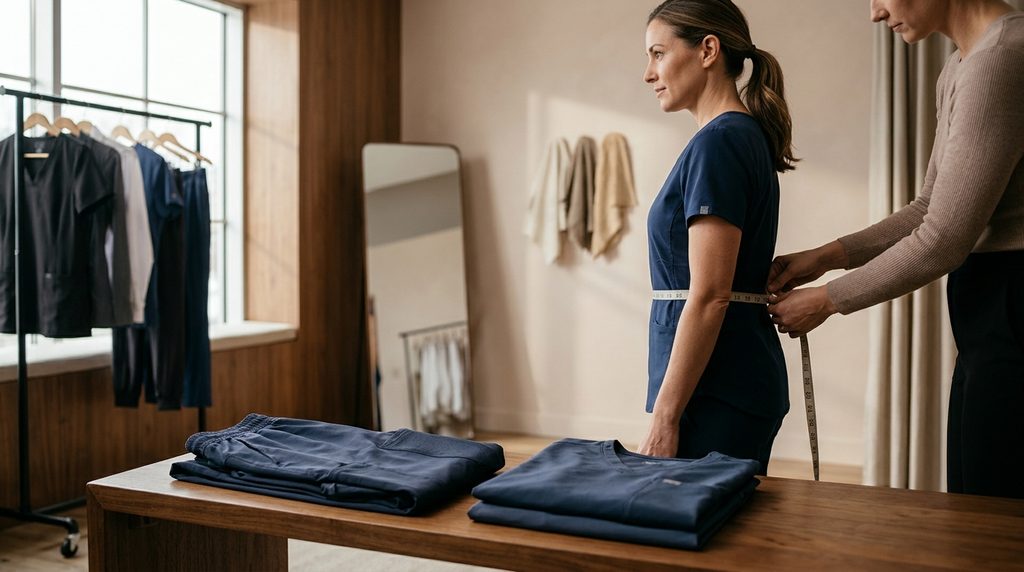
For tops, common measurements include:
- Chest or Bust
- Shoulder Width
- Waist
- Torso Length
For pants, common measurements include:
- Waist
- Hips
- Rise
- Inseam
Take measurements while standing naturally.
The goal is to obtain an accurate representation of your body rather than measuring while deliberately holding your stomach in or changing posture.
How Do You Measure Your Chest for Scrub Tops?
Wrap the measuring tape around the fullest part of the chest.
Keep the tape:
- Level
- Comfortable
- Parallel to the floor
- Snug without compression
For men’s scrub tops, chest measurement is often one of the key measurements used to determine size.
Shoulder width and torso length can still affect whether the chosen top feels comfortable.
How Do You Measure Your Bust for Women’s Scrubs?
Wrap the measuring tape around the fullest part of the bust.
The tape should remain level around the body without being pulled tightly.
A bust measurement can help determine the appropriate scrub-top size, but professionals should also consider:
- Shoulder Width
- Waist
- Arm Movement
- Garment Cut
- Available Stretch
A single measurement does not determine the complete fit.
How Do You Measure Your Waist for Scrub Pants?
Measure around the area where the waistband is intended to sit.
Do not pull the tape tightly.
The measurement should reflect your natural standing position.
Because different pants have different rises, the same waist measurement can feel different depending on where the waistband sits.
How Do You Measure Your Hips?
Measure around the fullest part of the hips and seat.
This is particularly important when selecting fitted or tapered scrub pants.
Adequate hip room can help prevent pulling during:
- Walking
- Sitting
- Bending
- Squatting
How Do You Measure Scrub Pant Inseam?
Inseam is measured from the crotch area down the inside of the leg to the desired hem position.
A properly selected inseam can help the pants sit appropriately above the footwear.
An incorrect inseam can result in:
- Excess Fabric
- Pants Sitting Too High
- Awkward Ankle Position
- Increased Need for Alterations
Inseam can be especially important when choosing petite or tall lengths.
Why Does Rise Matter in Scrub Pants?
Rise describes the distance from the crotch area toward the waistband.
It influences how the pants sit around the:
- Waist
- Abdomen
- Hips
- Seat
A suitable rise should allow comfortable movement without excessive pressure or pulling.
Professionals who frequently sit, bend, or squat may notice rise more than someone who spends most of the shift standing.
What Is the Difference Between High-Rise, Mid-Rise, and Lower-Rise Scrub Pants?
The terminology can vary between manufacturers, but generally:
Higher-rise pants sit higher around the waist.
Mid-rise pants sit around the middle portion of the waist or upper hip.
Lower-rise pants sit lower on the body.
The best choice depends on comfort, body proportions, and the intended fit of the garment.
How Should Scrub Pants Fit Around the Waist?
The waistband should stay in place without excessive pressure.
A good waistband should allow you to:
- Sit
- Bend
- Walk
- Reach
- Squat
without constantly adjusting the pants.
If the waistband digs into the body, the garment may be too small or the rise may not suit your proportions.
If the pants repeatedly slide downward, the size, rise, or waistband construction may not be appropriate.
How Should Scrub Pants Fit Around the Hips?
The fabric should follow the body’s general shape without excessive pulling.
Watch for:
- Horizontal Pulling
- Tightness While Sitting
- Restricted Hip Movement
- Excessive Fabric
- Pocket Distortion
The correct fit provides enough ease for movement without creating unnecessary bulk.
How Should Scrub Pants Fit Around the Thighs?
Thigh room is particularly important for professionals who walk, bend, squat, or climb stairs frequently.
The pants should not create excessive tension when the knees bend.
A useful test is to perform several normal movements while wearing the pants.
If the fabric pulls noticeably across the thighs or restricts movement, a different size or cut may be more appropriate.
How Should Jogger Scrub Pants Fit?
Joggers are designed with a tapered lower leg, so the silhouette naturally becomes narrower toward the ankle.
However, the taper should not mean that the upper leg is excessively tight.
A properly fitted jogger should provide adequate room through:
- Hips
- Seat
- Thighs
- Knees
while maintaining a controlled taper below the knee.
How Should Cargo Scrub Pants Fit?
Cargo pants can have more fabric and pocket construction than other styles.
They should still fit comfortably around:
- Waist
- Hips
- Seat
- Thighs
- Knees
Pay particular attention to the way cargo pockets sit when walking and sitting.
If the pockets pull or create excessive bulk, the cut or size may not be appropriate.
How Should Straight-Leg Scrub Pants Fit?
Straight-leg pants should maintain a relatively consistent leg width from the thigh toward the lower leg.
They should not be excessively loose or restrictive.
This style can be useful for professionals who prefer a traditional scrub silhouette and want more room around the lower leg than a jogger provides.
What Should You Look for in Scrub Top Shoulders?
Shoulder fit can affect the entire upper-body garment.
The shoulder seam should generally sit near the natural shoulder rather than extending significantly down the arm or pulling inward.
Check shoulder fit by:
- Raising both arms.
- Reaching forward.
- Reaching overhead.
- Rotating the upper body.
The top should remain comfortable throughout these movements.
How Should Scrub Sleeves Fit?
Sleeves should allow normal arm movement without excessive tightness around the upper arm.
Check whether the sleeve:
- Pulls When Reaching
- Restricts Arm Movement
- Creates Excessive Fabric
- Rides Up Uncomfortably
The ideal sleeve depends on the garment design and professional preference.
How Should a Scrub Top Fit Around the Chest or Bust?
The top should provide adequate room without excessive fabric.
Signs that a top may be too small include:
- Pulling Across the Chest
- Strained Seams
- Restricted Arm Movement
- Excessive Gaping
Signs that it may be too large include:
- Excessive Fabric
- Drooping Shoulders
- Poorly Positioned Pockets
- Difficulty Layering
How Should a Scrub Top Fit Around the Waist?
The waist area should provide enough room for movement without creating unnecessary volume.
A more tailored top may sit closer to the body, while a relaxed scrub top may provide additional ease.
Neither is automatically better.
The important question is whether the garment remains comfortable throughout the shift.
How Long Should a Scrub Top Be?
There is no universal ideal length.
The appropriate length depends on:
- Garment Style
- Body Proportions
- Whether It Is Designed to Be Tucked
- Pant Rise
- Workplace Requirements
A top should provide appropriate coverage while allowing comfortable movement.
What Is a Tuck-In Scrub Top?
A tuck-in scrub top is designed to be worn inside the waistband of scrub pants.
It can create a more structured appearance.
When choosing one, consider the relationship between:
- Top Length
- Pant Rise
- Waistband
- Torso Length
A top that is too short may repeatedly come untucked during movement.
Should Scrubs Be Loose or Fitted?
Neither extreme is ideal for everyone.
A good fit provides enough ease for movement while avoiding excessive fabric.
A fitted garment can look polished without being tight.
A relaxed garment can be comfortable without being oversized.
The appropriate amount of ease depends on body proportions, garment design, work requirements, and personal preference.
Can Tight Scrubs Affect Movement?
Yes.
Overly tight scrubs may restrict:
- Shoulder Movement
- Hip Movement
- Knee Flexion
- Bending
- Sitting
- Reaching
They may also place unnecessary tension on seams and fabric.
Stretch can improve flexibility, but it does not make an undersized garment correctly fitted.
Can Oversized Scrubs Affect Comfort?
Yes.
Excessive fabric can create:
- Bulk
- Extra Weight
- Poor Layering
- Pocket Movement
- Interference During Work
The goal is not to select the loosest available garment.
It is to select enough room for comfortable movement.
How Does Stretch Affect Scrub Fit?
Stretch can allow a garment to accommodate movement more easily.
It can be useful in areas such as:
- Shoulders
- Back
- Hips
- Thighs
- Knees
However, stretch should complement proper sizing.
A garment that relies heavily on stretching to fit may still feel uncomfortable during an extended shift.
What Is Stretch Recovery and Why Does It Matter?
Stretch recovery refers to how well fabric returns toward its original shape after being stretched.
Good recovery can help maintain:
- Fit
- Shape
- Appearance
- Waistband Position
This matters particularly for professionals who wear the same garments repeatedly.
How Does Fabric Affect Scrub Fit?
Fabric characteristics can change how a garment feels even when the measurements are similar.
Consider:
- Fabric Weight
- Stretch
- Structure
- Softness
- Drape
- Breathability
A structured fabric may create a more defined silhouette, while a softer fabric may drape more closely around the body.
Does Fabric Composition Affect Sizing?
It can affect how a garment feels and moves.
Two garments with similar measurements can perform differently if one has substantial stretch and the other has limited stretch.
This is why the garment’s fabric description should be considered alongside its size chart.
How Important Is Breathability for Scrub Fit?
Breathability does not determine fit, but it can significantly affect comfort.
A garment that fits correctly may still feel uncomfortable if the fabric is unsuitable for the environment.
Professionals working long or physically active shifts may want to consider breathability alongside:
- Weight
- Stretch
- Moisture Management
- Layering
How Do You Know if Scrubs Are Too Small?
Common signs include:
- Shoulder Pulling
- Tightness Across the Chest
- Restricted Arm Movement
- Waistband Pressure
- Pulling Across the Hips
- Tight Thighs
- Restricted Knee Movement
- Strained Seams
Perform realistic movements before deciding whether the garment fits.
How Do You Know if Scrubs Are Too Large?
Common signs include:
- Drooping Shoulders
- Excessive Torso Fabric
- Loose Waistband
- Excess Fabric Around the Thighs
- Excessively Long Sleeves
- Pants Sliding Down
- Poorly Positioned Pockets
A relaxed fit is not necessarily oversized.
The key is whether the garment remains functional.
How Should You Check Scrub Fit While Moving?
Standing in front of a mirror is not enough.
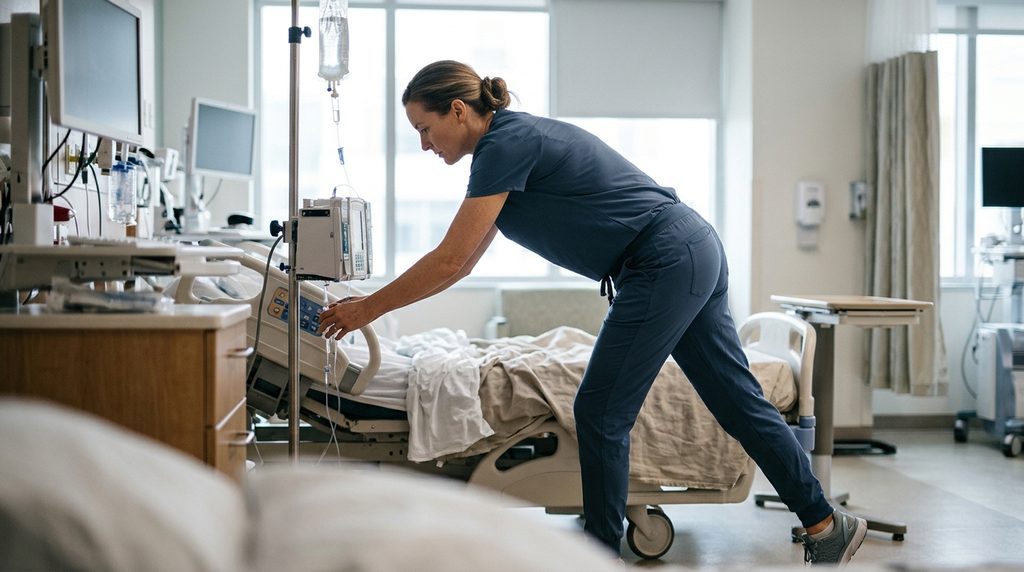
Try:
Walking
Check whether the pants shift or restrict the stride.
Sitting
Evaluate the waistband and rise.
Bending
Check the back, hips, and thighs.
Squatting
Evaluate knee and thigh mobility.
Reaching
Check shoulders and sleeves.
Raising Your Arms
Check whether the top pulls upward or becomes restrictive.
These movements provide a more realistic assessment of clinical fit.
Should You Try Scrubs With the Shoes You Wear to Work?
Yes, particularly when evaluating pant length.
Footwear can affect how the pant hem sits around the ankle.
This is especially relevant for:
- Joggers
- Straight-Leg Pants
- Petite Lengths
- Tall Lengths
Try to evaluate the full uniform as it will actually be worn.
How Do Petite Professionals Choose the Right Scrub Fit?
Petite professionals should pay particular attention to proportion rather than simply choosing a smaller size.
Important considerations include:
- Inseam
- Rise
- Torso Length
- Sleeve Length
- Pocket Placement
A garment can be the correct width but still be too long through the torso or legs.
How Do Tall Professionals Choose the Right Scrub Fit?
Tall professionals should prioritize:
- Inseam
- Rise
- Sleeve Length
- Torso Length
A pant that fits correctly around the waist may still be too short.
Likewise, a scrub top may fit through the chest while being too short through the torso.
How Should Professionals With Fuller Hips Choose Scrubs?
Focus on the hip and seat measurements rather than selecting a size based only on waist.
Look for enough room to sit and bend comfortably.
Stretch can help, but the underlying garment should still provide appropriate ease.
How Should Professionals With Larger Thighs Choose Scrub Pants?
Thigh room should be evaluated independently from waist size.
A pant can fit correctly around the waist while being too restrictive around the thighs.
Consider:
- Thigh Measurement
- Rise
- Stretch
- Leg Shape
- Seat Construction
Cargo and relaxed styles may provide more room, while some tapered styles may require closer attention to the upper-leg fit.
How Should Professionals With Broader Shoulders Choose Scrub Tops?
Shoulder and chest measurements should be considered together.
The top should allow the arms to move without pulling across the upper back.
If the shoulders fit but the torso is too loose, look for a different cut rather than simply sizing down.
How Should Men Choose the Right Scrub Fit?
Men should consider:
- Chest
- Shoulder Width
- Torso Length
- Waist
- Seat
- Thighs
- Rise
- Inseam
Professionals looking for medical scrubs for men should evaluate each garment according to its specific cut rather than assuming every style will fit the same way.
How Should Women Choose the Right Scrub Fit?
Women should consider:
- Bust
- Shoulder Width
- Waist
- Hips
- Thighs
- Torso Length
- Rise
- Inseam
A professional may need different sizes or fits for the top and bottom.
Those exploring women’s medical scrubs should use the specific garment measurements to make the final decision.
Should Your Scrub Top and Pants Be the Same Size?
Not necessarily.
Body proportions differ.
You may need a larger pant size because of hip or thigh measurements while wearing a smaller top size.
Conversely, broader shoulders or a larger chest may require a larger top while the pants require a smaller size.
Separate sizing can be useful when available.
How Does Body Proportion Affect Scrub Fit?
Two people with the same height and weight can have very different proportions.
Differences in:
- Shoulder Width
- Chest
- Waist
- Hip
- Thigh
- Torso Length
- Leg Length
can significantly change how the same garment fits.
This is why weight or height alone should not be used to determine scrub size.
How Should You Choose Between Relaxed and Tailored Scrubs?
Consider your work and preferred appearance.
Relaxed Fit
Can provide additional ease and a more traditional silhouette.
Tailored Fit
Can create a more defined shape while still providing movement when correctly designed.
Contemporary Fit
May combine moderate shaping with stretch and modern silhouettes.
The best option is the one that remains comfortable during actual work.
How Should You Choose Between Joggers and Straight-Leg Pants?
Consider the lower-leg silhouette you prefer.
Joggers offer a tapered leg and often an elasticized ankle.
Straight-leg pants provide a more open lower-leg silhouette.
Neither is inherently more comfortable.
Fit, fabric, rise, and inseam remain more important.
How Should You Choose Between Cargo and Jogger Pants?
Consider storage first.
Cargo pants may be preferable if you need additional utility pockets.
Joggers may be preferable if you carry fewer items and prefer a streamlined silhouette.
Both can be comfortable when properly fitted.
How Important Are Pockets When Choosing Scrubs?
Pockets should match actual work needs.
Evaluate:
- Number
- Depth
- Location
- Accessibility
- Closures
- Weight Distribution
A pocket should remain useful without creating excessive bulk.
Can Pocket Weight Affect Fit?
Yes.
Heavy items can pull on the garment and affect:
- Waistband Position
- Pocket Shape
- Fabric Drape
- Comfort
Carry only necessary and workplace-approved items.
How Should You Choose Scrub Pants if You Carry Many Items?
Look for practical storage without excessive bulk.
Cargo-style pants can provide additional compartments.
However, distribute lightweight items rather than placing everything into one pocket.
The goal is convenient storage without compromising movement.
How Should You Choose Scrubs for Long Clinical Shifts?
Prioritize:
- Comfortable Fit
- Breathability
- Stretch
- Waistband Comfort
- Appropriate Rise
- Useful Pockets
- Suitable Fabric Weight
A uniform should remain comfortable after several hours, not just when first put on.
What Does a Good Scrub Fit Feel Like After Several Hours?
A good fit should not require constant adjustment.
You should not repeatedly need to:
- Pull Up the Pants
- Adjust the Waistband
- Pull Down the Top
- Readjust Sleeves
- Rearrange Pockets
Frequent adjustment can indicate that the garment’s cut or size is not suitable.
How Does Workplace Dress Code Affect Scrub Fit?
Workplace requirements can influence which silhouettes and colors are acceptable.
For example, an employer may specify:
- Certain Colors
- Approved Styles
- Required Coverage
- Department-Specific Uniforms
- Restrictions on Prints
Fit should therefore be considered within the requirements of the workplace.
Can a Scrub Fit Be Professional Without Being Traditional?
Yes.
Modern scrub designs can provide contemporary silhouettes while maintaining appropriate professional coverage and functionality.
The key is to ensure that the garment remains suitable for the clinical environment.
What Are Common Scrub-Fit Mistakes?
Choosing Based Only on Size
A size label does not guarantee the right fit.
Ignoring Measurements
Specific body measurements provide more useful information.
Buying the Same Size for Every Garment
Different cuts can fit differently.
Choosing a Smaller Size for a Slimmer Appearance
This can restrict movement.
Ignoring Inseam
Pant length can significantly affect appearance and comfort.
Forgetting Rise
Rise affects sitting, bending, and waistband comfort.
Ignoring Fabric Stretch
Stretch characteristics can change how a garment behaves.
Testing Only While Standing
Clinical work involves movement.
How Can You Make Sure Scrubs Fit Before Buying?
Use a simple checklist:
- Check the garment’s size chart.
- Measure yourself accurately.
- Compare your measurements with the chart.
- Review the garment’s cut.
- Consider fabric stretch.
- Check inseam options.
- Consider pocket placement.
- Review return or exchange conditions where applicable.
- Test realistic movements after receiving the garment.
- Keep the garment only if it remains comfortable and functional.
How Should You Build a Wardrobe Around Good Fit?
Start with garments that consistently fit well.
Once you identify your preferred:
- Top Cut
- Pant Rise
- Inseam
- Leg Shape
- Fabric Stretch
- Waistband Style
you can use those preferences to guide future purchases.
This can make shopping more efficient without assuming every garment from a particular category will fit identically.
Why Is a Good Scrub Fit Important for Professional Appearance?
Fit affects the overall silhouette of the uniform.
A properly fitting garment can:
- Look More Polished
- Maintain Appropriate Coverage
- Sit Correctly
- Reduce Excess Fabric
- Avoid Visible Strain
Professional appearance is not about wearing tight clothing.
It is about selecting clothing that fits appropriately and remains well maintained.
How Should You Evaluate Comfortable Medical Scrubs?
When evaluating comfortable medical scrubs, consider more than softness.
Look at:
- Fit
- Stretch
- Breathability
- Weight
- Waistband
- Pocket Placement
- Mobility
- Care Requirements
A soft fabric is not necessarily comfortable if the garment does not fit properly.
What Is the Best Way to Find the Right Scrub Fit?
The most reliable approach is to combine measurements with movement testing.
Start with your body measurements.
Then evaluate:
- Garment Cut
- Fabric
- Stretch
- Rise
- Inseam
- Pocket Configuration
- Workplace Requirements
Finally, test the garment through realistic movements.
This provides a much better indication of fit than simply selecting your usual clothing size.
Scrub Fit Checklist
| Area | What to Check |
| Shoulders | Seams sit appropriately without pulling |
| Chest/Bust | Enough room without excessive fabric |
| Sleeves | Comfortable arm movement |
| Torso | Appropriate length and coverage |
| Waist | Secure without excessive pressure |
| Rise | Comfortable while sitting and bending |
| Hips | Enough room for movement |
| Thighs | No restrictive pulling |
| Inseam | Appropriate length |
| Leg Opening | Comfortable preferred silhouette |
| Pockets | Useful and accessible |
| Fabric | Suitable stretch, weight, and breathability |
| Overall | Comfortable during realistic movement |
Frequently Asked Questions
How should medical scrubs fit?
Medical scrubs should provide enough room for comfortable movement while maintaining appropriate coverage and a professional appearance. The fit should allow walking, sitting, bending, reaching, and squatting without excessive pulling or unnecessary fabric.
Should scrubs be tight or loose?
Neither extreme is ideal. Scrubs should provide enough ease for movement without becoming excessively loose. A tailored or contemporary fit can still be comfortable as long as it does not restrict normal movement.
How do I know what scrub size to buy?
Start by taking accurate body measurements and comparing them with the specific garment’s size chart. Consider the garment’s cut, fabric stretch, and intended fit because different styles can fit differently even when they use the same size label.
Should scrub tops and pants be the same size?
No. Different body proportions may require different sizes for tops and pants. A professional may need a larger pant size because of hip or thigh measurements while wearing a smaller top, or vice versa.
How should scrub pants fit around the waist?
The waistband should remain secure without excessive pressure. You should be able to sit, bend, walk, and squat without constantly adjusting the pants.
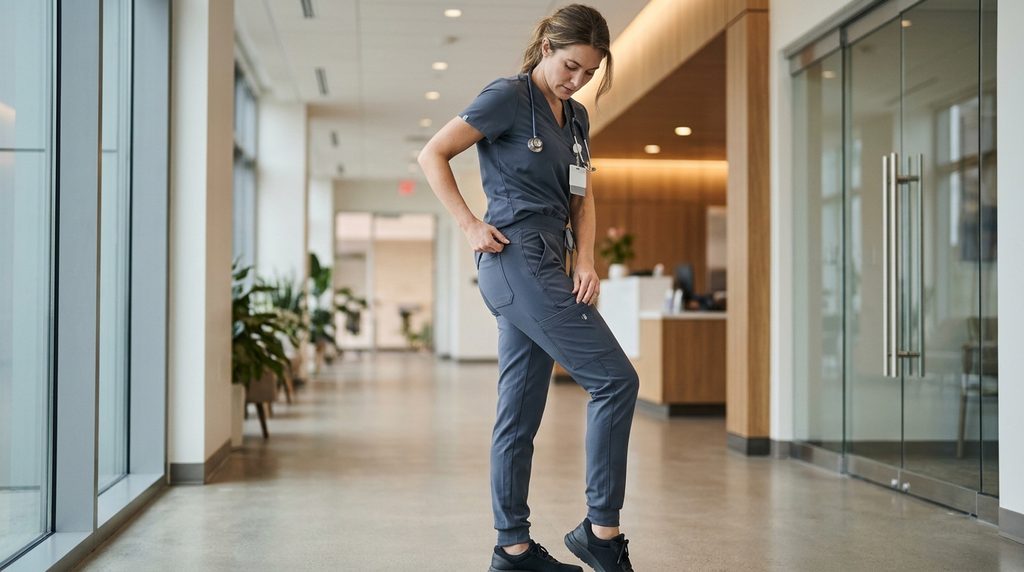
How should scrub pants fit around the thighs?
There should be enough room for normal movement without excessive pulling. Thigh fit is particularly important for professionals who frequently bend, squat, walk, or climb stairs.
How should jogger scrubs fit?
Joggers should have adequate room through the hips, seat, thighs, and knees while becoming progressively narrower toward the ankle. The tapered leg should not restrict movement.
How should cargo scrub pants fit?
Cargo pants should provide sufficient room through the waist, hips, seat, and thighs while allowing the utility pockets to sit naturally. Pocket contents should not create excessive pulling or bulk.
How important is inseam when choosing scrub pants?
Inseam is important because it determines how the pant leg sits around the ankle and footwear. The appropriate length depends on height, body proportions, preferred style, and whether petite, regular, or tall lengths are available.
Does stretch make scrubs more comfortable?
Stretch can support movement and flexibility, but it does not replace correct sizing. A garment should still provide sufficient room through the shoulders, torso, hips, thighs, and other areas that require movement.
How can I tell if scrubs are too small?
Common signs include pulling across the chest or hips, restricted arm movement, tight thighs, waistband pressure, and strained seams. Test the garment while walking, sitting, bending, reaching, and squatting.
How can I tell if scrubs are too large?
Signs can include drooping shoulders, excessive torso fabric, a loose waistband, pants sliding down, and poorly positioned pockets. A relaxed fit is acceptable, but excessive fabric can interfere with movement and layering.
How should women choose medical scrubs?
Women should consider bust, shoulder, waist, hip, thigh, torso, rise, and inseam measurements. The top and bottom may require different sizes depending on individual proportions.
How should men choose medical scrubs?
Men should consider chest, shoulder width, torso length, waist, seat, thigh, rise, and inseam measurements. Different pant and top cuts can create different fits even within the same size.
How should petite professionals choose scrubs?
Petite professionals should pay particular attention to inseam, rise, torso length, sleeve length, and pocket placement. A smaller width does not necessarily mean the garment has appropriate proportions for a shorter body.
How should tall professionals choose scrubs?
Tall professionals should prioritize inseam, rise, sleeve length, and torso length. A garment can fit properly around the waist or chest while still being too short through the legs or torso.
What is the best scrub fit for long shifts?
The best fit is one that remains comfortable after several hours of movement. Prioritize appropriate sizing, stretch, breathability, waistband comfort, rise, inseam, and practical pocket placement.
How important are scrub pockets?
Pockets are important when they match the professional’s actual work needs. Evaluate pocket number, depth, location, accessibility, closures, and weight distribution rather than simply choosing the garment with the most pockets.
Can pocket weight affect scrub fit?
Yes. Heavy items can pull on the garment, affect waistband position, distort pockets, and reduce comfort. Only necessary and workplace-approved items should be carried.
Are comfortable medical scrubs always loose?
No. Comfortable scrubs can have a tailored or contemporary fit. Comfort depends on appropriate sizing, fabric, stretch, construction, and mobility rather than looseness alone.
How can I make sure scrubs fit properly before wearing them at work?
Check the size chart, compare it with accurate body measurements, and test the garment through realistic movements. Walk, sit, bend, squat, reach, and raise your arms before deciding whether the fit is suitable.
What should I consider besides size when buying scrubs?
Consider garment cut, fabric stretch, breathability, rise, inseam, pocket placement, waistband construction, workplace requirements, and intended use. These factors can significantly affect how the garment feels.
How should medical scrubs be washed?
Follow the manufacturer’s care instructions for each garment because fabric blends and construction can vary. The CDC recommends following manufacturer care instructions and applicable healthcare laundering requirements for healthcare textiles and clothing.