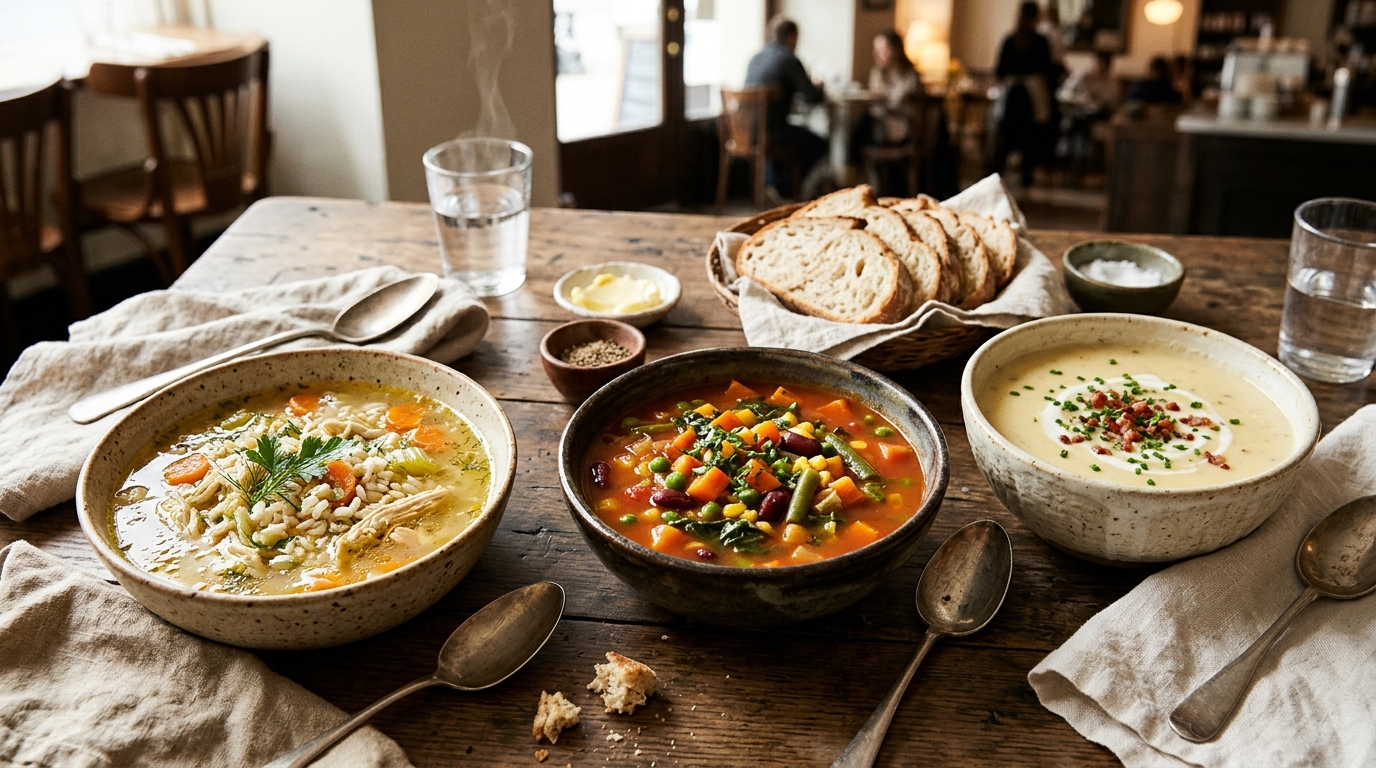
Soup is a familiar part of restaurant dining, offering a variety of flavors, ingredients, and textures that suit different preferences and occasions. From traditional chicken rice soup and hearty vegetable combinations to creamy favorites and broth-based recipes, restaurant soups can serve as appetizers, lighter meals, or satisfying main courses. Their versatility makes them popular choices for customers looking for something warm, flavorful, and comforting.
Homemade-style soups often appeal to diners because they combine recognizable ingredients with familiar preparation methods. Vegetables, meats, herbs, grains, and broths can be brought together in countless ways, creating dishes with different flavor profiles and textures. Some soups are light and simple, while others contain substantial ingredients that make them suitable as complete meals.
Understanding the different types of restaurant soups can help customers explore menu options and find dishes that match their tastes. It also explains why traditional soup recipes continue to hold an important place in everyday restaurant dining.
Key Takeaways
- Restaurant soups come in several varieties, including broth-based, creamy, vegetable, and meat-based preparations.
- Chicken rice soup is a familiar option featuring chicken, rice, vegetables, and broth.
- Homemade-style preparation often emphasizes recognizable ingredients and balanced seasoning.
- Soup texture depends on ingredients, cooking methods, and preparation techniques.
- Different soups can work as appetizers, lighter meals, or substantial entrees.
- Ingredient information is important for customers with dietary preferences or food allergies.
- Proper storage, preparation, and serving temperatures contribute to food quality and safety.
What Makes Restaurant Soup a Popular Dining Choice?
Soup remains a popular restaurant option because it can accommodate different tastes while offering considerable flexibility in ingredients and preparation. A simple broth-based soup can provide a lighter start to a meal, while a thicker soup containing vegetables, grains, or meat can serve as a more substantial dish.
Several characteristics contribute to its popularity:
- Versatility: Soups can incorporate vegetables, meats, grains, legumes, and different seasonings.
- Variety: Restaurants can offer creamy, clear, chunky, and blended preparations.
- Familiarity: Traditional soup recipes are often associated with home cooking and family meals.
- Convenience: Soup can be served as an appetizer, side dish, or main course.
- Adaptability: Different ingredients and seasonings allow restaurants to create distinctive recipes.
For customers interested in familiar, satisfying meals, a homemade-style soup can be an appealing option when exploring traditional restaurant preparations.
What Are the Most Popular Types of Restaurant Soups?
Restaurant soup menus can include traditional recipes, regional specialties, and creative combinations. Each type offers a different balance of ingredients, consistency, and flavor.
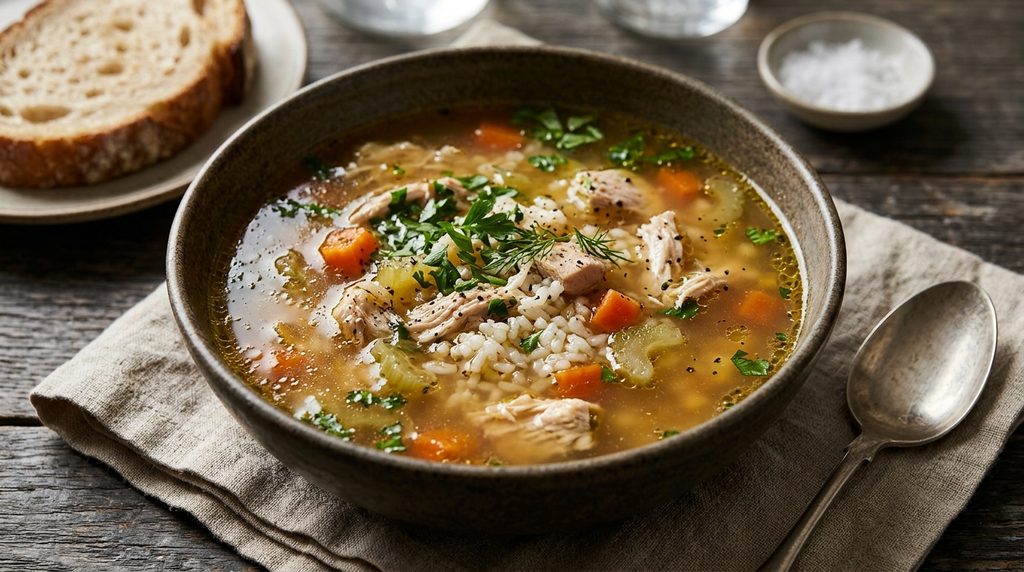
Chicken Rice Soup
Chicken rice soup is a familiar preparation made with chicken, rice, broth, and vegetables. Carrots, celery, onions, and herbs are common additions that contribute flavor and texture.
The rice gives the soup additional substance, while the chicken provides a savory component. Depending on the recipe, the broth may be light and clear or more concentrated.
This variety is popular with diners who enjoy traditional soup recipes and recognizable ingredients. It can be served as a starter or as a standalone meal, depending on portion size.
Customers interested in this preparation can explore the chicken rice soup recipe for additional inspiration.
Vegetable Soup
Vegetable soup combines ingredients such as carrots, potatoes, tomatoes, celery, peas, green beans, and onions. Recipes vary according to seasonal availability and the preferred flavor profile.
Some versions use a clear vegetable broth, while others incorporate tomatoes or legumes for a thicker consistency.
Vegetable soup can offer a practical way to combine different ingredients in one dish. Its nutritional composition depends on the actual recipe, portion size, and preparation method.
Cream-Based Soup
Cream-based soups are known for their smooth, rich consistency. They commonly use dairy, blended vegetables, or thickening ingredients to create a fuller texture.
Popular examples include:
- Cream of mushroom soup.
- Cream of tomato soup.
- Cream of chicken soup.
- Cream of potato soup.
- Cream of broccoli soup.
These soups can be particularly appealing to diners who prefer smooth preparations and richer flavors.
Ingredients differ between recipes, so customers with dairy allergies or other dietary requirements should confirm the preparation details with restaurant staff.
Tomato Soup
Tomato soup is a familiar restaurant favorite made primarily with tomatoes, broth, and seasonings. Depending on the recipe, it may have a smooth blended consistency or contain small pieces of tomato and vegetables.
Garlic, onions, basil, and other herbs can enhance its flavor. Some versions include cream, while others rely on tomatoes and broth for their consistency.
Tomato soup is also commonly served alongside sandwiches or bread, making it a versatile option for lunch.
Chicken Noodle Soup
Chicken noodle soup combines chicken, noodles, vegetables, and broth. Its familiar ingredients make it a recognizable choice across many restaurant menus.
The type of noodle can vary, with some recipes using egg noodles and others featuring different pasta shapes. The broth provides the base, while vegetables and seasonings add additional flavor.
Chicken noodle soup is often served as a starter or a lighter meal, although larger portions can make it more substantial.
Potato Soup
Potato soup can range from a smooth blended preparation to a thicker soup containing visible potato pieces. Common ingredients include potatoes, onions, broth, herbs, and sometimes dairy products.
Some restaurant versions include additional ingredients such as cheese, bacon, or green onions.
The appeal of potato soup often comes from its creamy or hearty consistency and familiar savory flavor.
What Ingredients Make a Good Homemade-Style Soup?
The ingredients used in soup determine much of its flavor, texture, and overall character. Even simple recipes can produce satisfying results when their components are selected and prepared appropriately.
Most traditional soups contain several basic elements.
| Ingredient Category | Common Examples | Purpose |
| Broth or liquid | Chicken broth, vegetable broth, beef broth | Provides the base and carries flavor |
| Protein | Chicken, beef, beans, lentils | Adds substance and texture |
| Vegetables | Carrots, celery, onions, potatoes | Contributes flavor and variety |
| Grains and pasta | Rice, noodles, barley | Adds texture and makes soup more substantial |
| Herbs and spices | Parsley, thyme, black pepper, garlic | Enhances flavor |
| Dairy ingredients | Milk, cream, cheese | Creates richness and a smoother consistency |
Not every soup needs all these components. A simple tomato soup may rely on vegetables and broth, while chicken rice soup combines several ingredient categories.
The balance between ingredients is particularly important. Too much seasoning can overpower delicate flavors, while insufficient seasoning may leave a soup tasting flat.
How Broth Influences the Flavor of Soup
Broth is one of the most important components in many soup recipes. It provides the liquid foundation and helps bring together the flavors of vegetables, proteins, grains, and seasonings.
Different broth varieties produce different results.
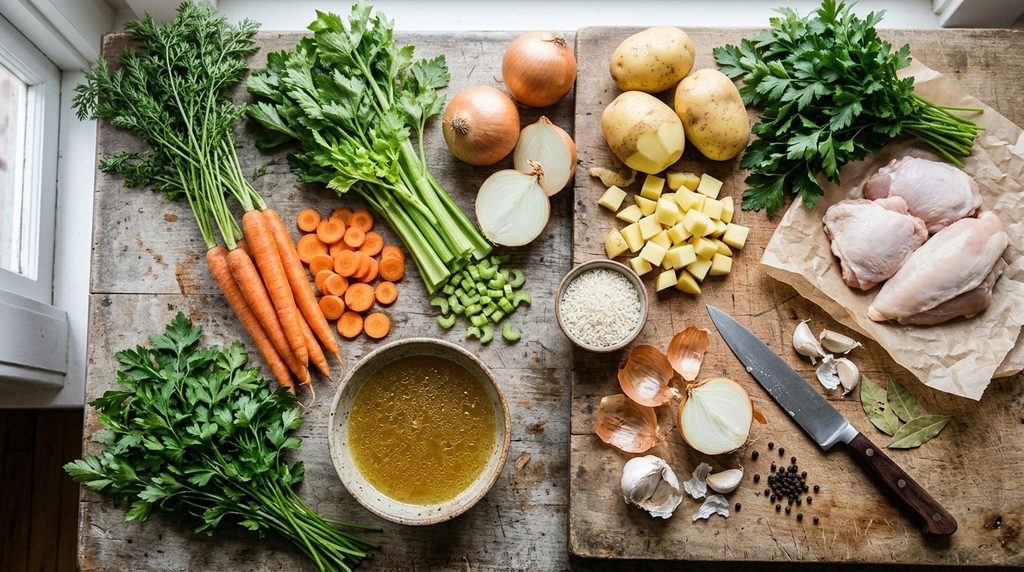
Chicken Broth
Chicken broth is commonly used in chicken noodle soup, chicken rice soup, and vegetable-based preparations. It offers a familiar savory foundation that works with a variety of ingredients.
Vegetable Broth
Vegetable broth is made using vegetables, herbs, and seasonings. It can provide a flavorful base for vegetable soups and other meat-free preparations.
Beef Broth
Beef broth generally has a deeper savory character and can complement hearty vegetable, beef, and grain-based soups.
Homemade-Style Broth Preparation
Broth recipes vary considerably. Some use prepared stock, while others develop flavor by simmering ingredients together.
The final taste depends on the ingredients, cooking time, seasoning, and preparation technique.
Why Cooking Techniques Matter When Preparing Soup
Cooking methods influence how ingredients release flavor and how the finished soup feels. Some soups require gentle simmering, while others involve roasting, sautéing, blending, or combining ingredients at different stages.
Simmering
Simmering allows ingredients to cook gradually in liquid. It is commonly used for broth-based soups containing chicken, vegetables, grains, or legumes.
Sautéing
Sautéing vegetables such as onions, garlic, and celery before adding liquid can develop additional flavor. This technique is frequently used as an initial step in soup preparation.
Blending
Blending creates a smoother consistency by breaking down vegetables and other ingredients. It is often used for tomato, potato, and creamy vegetable soups.
Layered Preparation
Some recipes require ingredients to be added at different times. For example, vegetables that cook quickly may be added later than ingredients that require longer cooking.
These techniques help create the intended flavor and texture of each soup variety.
How to Choose the Right Soup at a Restaurant
Choosing a soup depends on appetite, flavor preferences, ingredients, and the type of meal being planned.
Some diners prefer a light broth-based option, while others want a thicker preparation that can serve as a complete meal.
Consider these factors when reviewing a restaurant menu:
- Consistency: Decide whether you prefer clear broth, chunky vegetables, or a smooth creamy texture.
- Ingredients: Review the main ingredients and available preparation details.
- Flavor: Consider whether you prefer mild, savory, herbal, or tomato-based flavors.
- Portion Size: Determine whether the soup is intended as an appetizer or a main course.
- Dietary Requirements: Confirm relevant allergens and preparation practices.
- Meal Pairings: Consider whether bread, sandwiches, salads, or other sides are available.
For diners exploring a comfort food restaurant, traditional soups can be a familiar option alongside other homemade-style meals.
What Foods Pair Well With Restaurant Soup?
Soup can be enjoyed on its own or combined with other menu items to create a more complete meal. The best pairing depends on the soup’s consistency, flavor, and portion size.
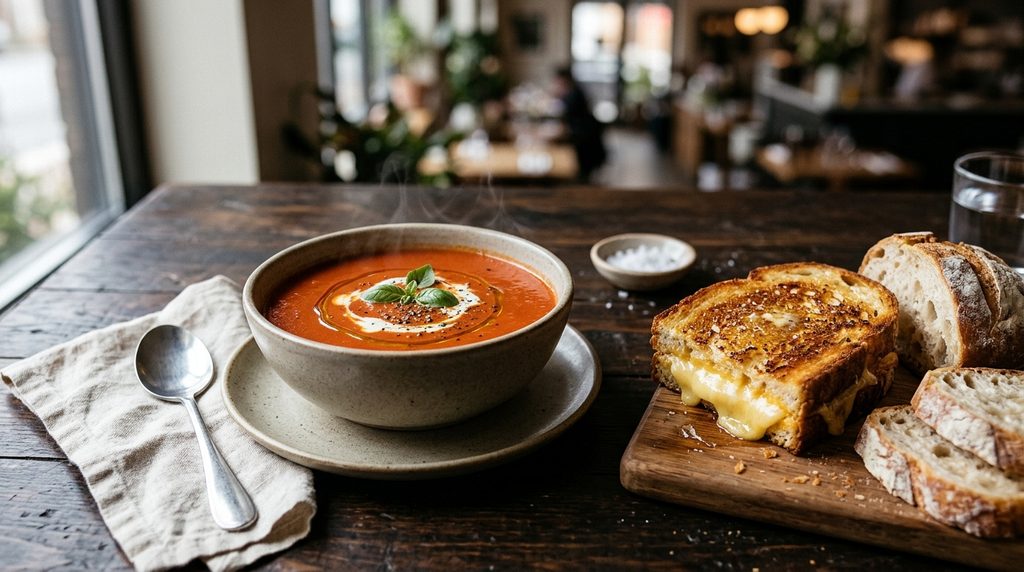
ALT: Restaurant tomato soup served with grilled cheese sandwich and bread
| Food Pairing | Suitable Soup Varieties | Why It Works |
| Garlic bread | Tomato, vegetable, creamy soups | Provides a contrasting texture |
| Grilled cheese sandwich | Tomato soup | Combines toasted bread with a smooth soup |
| Fresh salad | Chicken rice, vegetable soup | Adds freshness and crunch |
| Dinner rolls | Chicken noodle, potato soup | Provides a familiar accompaniment |
| Crackers | Broth-based soups | Adds a light crunchy texture |
| Sandwiches | Tomato, chicken noodle soup | Creates a convenient lunch combination |
Pairings are largely a matter of preference. A lighter soup may work well with a substantial sandwich, while a hearty soup may be satisfying without additional food.
How Restaurant Soups Fit Different Dining Occasions
Soup is not limited to one type of restaurant visit. Its flexibility makes it suitable for lunch, dinner, family meals, and casual dining.
Lunch
Soup can be a convenient lunch option, particularly when served with bread, a sandwich, or a salad. Customers who prefer a lighter meal may choose a smaller serving.
Dinner
Hearty soups containing chicken, vegetables, rice, or other substantial ingredients can work as dinner options. They may also be served as starters before a main course.
Family Dining
Familiar varieties such as chicken noodle, tomato, and vegetable soup can provide approachable choices for different family members.
Cold-Weather Meals
Warm soups are often associated with cooler weather because they provide a hot, comforting meal. However, many varieties are available throughout the year.
Casual Restaurant Visits
A bowl of soup can be a straightforward choice for diners who want a familiar dish without ordering a larger entree.
How Restaurants Maintain Soup Quality and Consistency
Preparing soup consistently requires attention to ingredients, cooking procedures, storage, and serving conditions.
Restaurants need to ensure that recipes produce dependable results while maintaining appropriate food-handling practices.
Important considerations include:
- Ingredient Quality: Use ingredients appropriate for the recipe and maintain suitable storage conditions.
- Recipe Consistency: Follow reliable measurements and preparation procedures.
- Cooking Temperature: Cook ingredients appropriately and monitor food temperatures.
- Storage Practices: Cool, store, and reheat soup using appropriate food-safety procedures.
- Serving Temperature: Serve soup at a suitable temperature while maintaining food safety.
- Portion Control: Provide consistent serving sizes.
The USDA recommends keeping hot food at 140°F or above when holding it for service and refrigerating perishable food promptly. Food-safety procedures are particularly important for soups containing meat, dairy, and cooked grains.
Can Restaurant Soup Accommodate Different Dietary Preferences?
Soup recipes can be adapted to accommodate different ingredient preferences, but customers should not assume that every variety is suitable for a particular dietary requirement.
For example, vegetable soup may be prepared without meat, but the broth could still contain animal-derived ingredients. Cream-based soups commonly contain dairy, while noodle soups may contain wheat.
Customers with dietary restrictions should ask about:
- The type of broth used.
- Whether dairy ingredients are included.
- Whether noodles contain wheat or gluten.
- The presence of meat, poultry, or animal-derived ingredients.
- Potential allergen cross-contact during preparation.
- Whether ingredient substitutions are available.
Restaurants should provide accurate information about ingredients and preparation procedures so customers can make informed decisions.
Why Homemade-Style Soup Remains a Restaurant Favorite
Homemade-style soup continues to appeal to restaurant customers because it offers familiar ingredients and a wide range of preparation possibilities.
A traditional recipe can remind diners of meals prepared at home, while different ingredients and seasonings allow restaurants to introduce new flavors.
The appeal often comes from several characteristics:
- Familiar Ingredients: Customers recognize vegetables, chicken, rice, noodles, and other common components.
- Flexible Preparation: Recipes can be adjusted to create different consistencies and flavor profiles.
- Meal Versatility: Soup can work as a starter, side dish, or main course.
- Comforting Flavors: Traditional preparations often provide a familiar dining experience.
- Menu Variety: Different soup options allow restaurants to accommodate changing preferences.
For restaurants, offering recognizable soup varieties alongside other entrees can provide additional choices for customers looking for satisfying everyday meals.
Frequently Asked Questions
What are the most popular types of restaurant soup?
Popular restaurant soups include chicken rice soup, chicken noodle soup, vegetable soup, tomato soup, cream of mushroom soup, and potato soup. Availability varies by restaurant, and recipes may differ in ingredients, consistency, and seasoning.
What is the difference between chicken rice soup and chicken noodle soup?
Chicken rice soup uses rice as its primary grain, while chicken noodle soup contains noodles or pasta. Both commonly include chicken, vegetables, broth, and seasonings, but their textures and overall eating experiences are different.
What makes homemade-style soup different from other restaurant soups?
Homemade-style soup generally emphasizes familiar recipes, recognizable ingredients, and traditional preparation approaches. However, the term does not guarantee that every ingredient is prepared from scratch. Customers interested in specific preparation methods should ask the restaurant for details.
Can soup be a complete meal?
Yes. Some soups contain substantial combinations of protein, vegetables, grains, or legumes and can be served as main courses. Whether a particular soup is filling enough depends on its ingredients and portion size.
What should customers consider when ordering soup?
Customers should consider the ingredients, broth type, consistency, portion size, and any dietary restrictions. They can also check whether the soup is served with bread, salad, or another accompaniment.
Conclusion
Restaurant soups offer a wide range of flavors, ingredients, and textures, making them versatile choices for different dining occasions. From chicken rice and chicken noodle soup to vegetable, tomato, and creamy varieties, each preparation provides a different experience.
The quality of a satisfying soup depends on ingredient selection, broth, seasoning, cooking techniques, and proper food handling. Understanding these details can help customers choose dishes that suit their preferences while appreciating the preparation behind traditional recipes.
Whether served as a starter, a light lunch, or a hearty dinner, homemade-style soup remains a familiar and versatile part of restaurant dining.