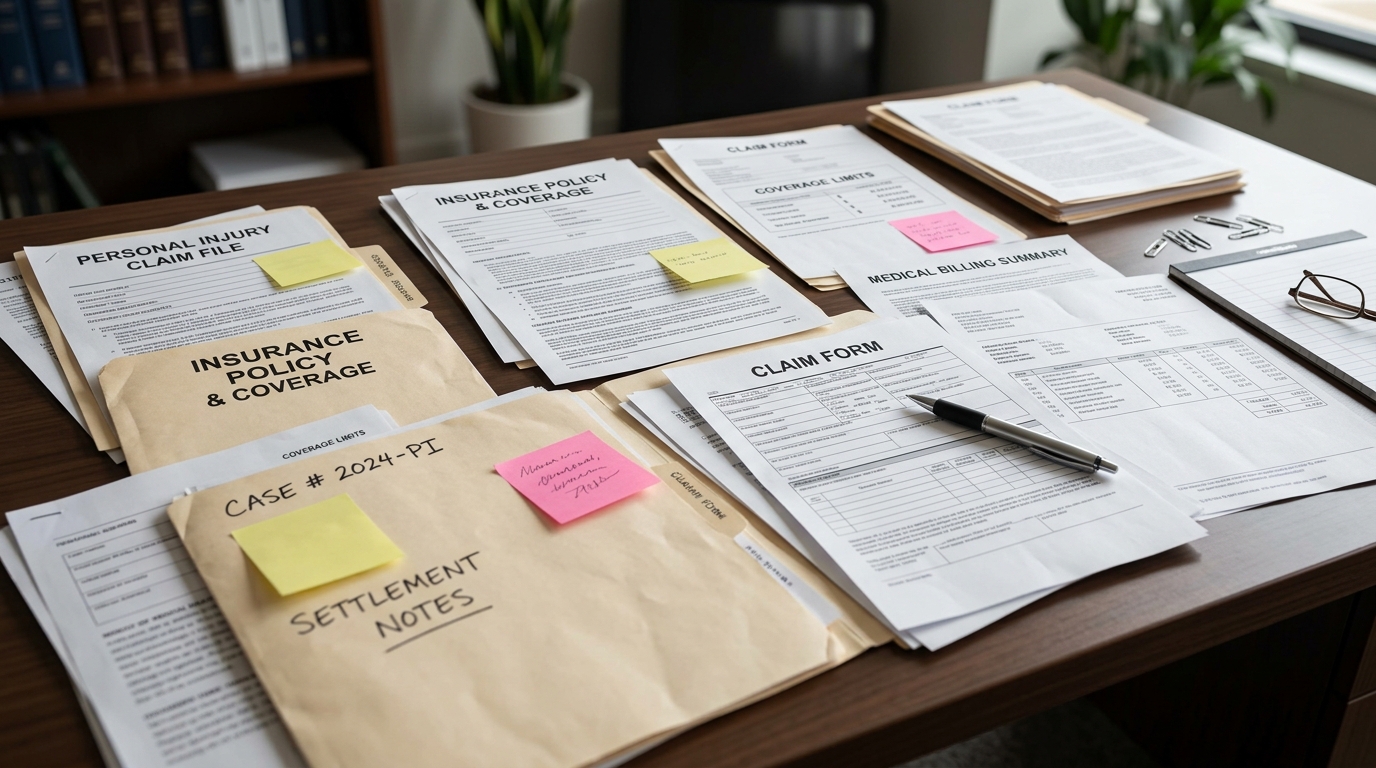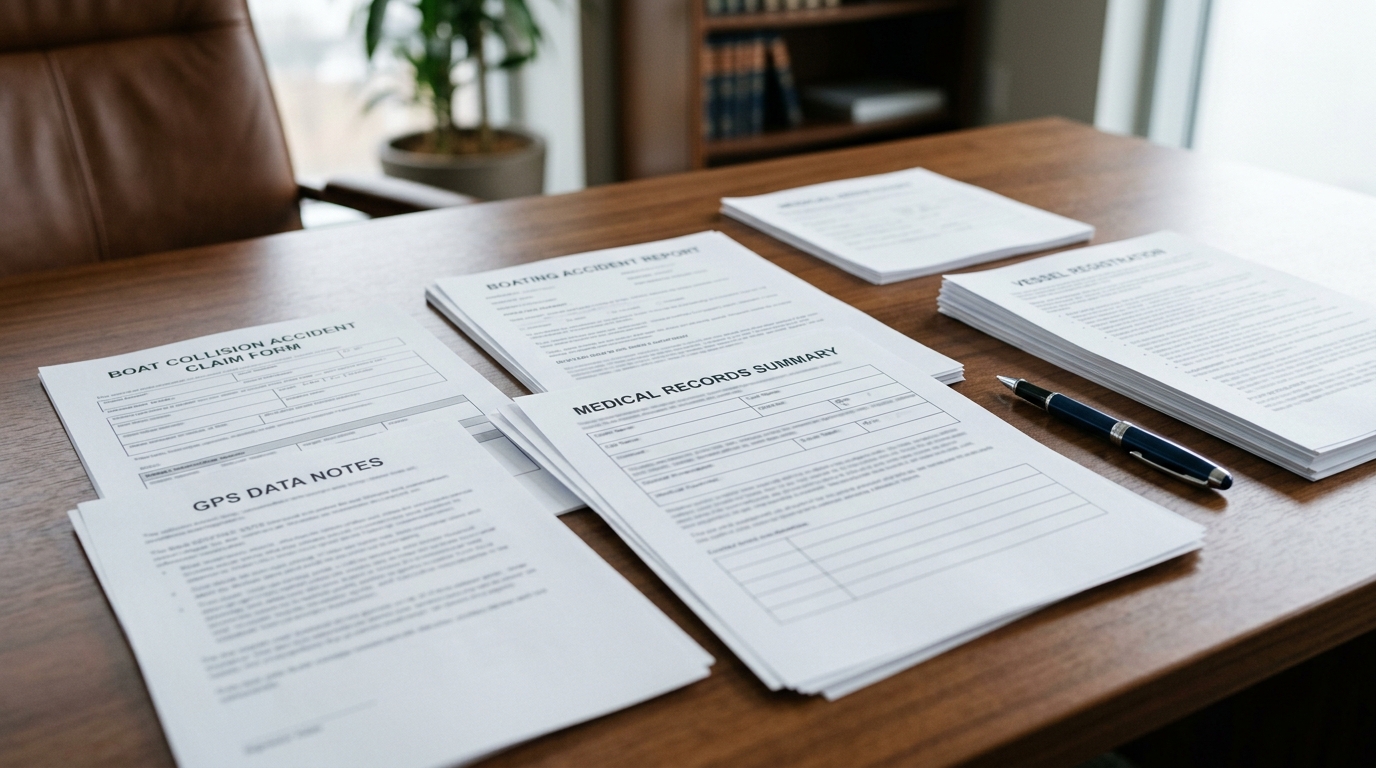
Boat collision accident claims in New York may involve recreational boats, rental vessels, personal watercraft, charter boats, fishing boats, kayaks, paddleboards, marinas, docks, unsafe wake, alcohol use, poor lookout, excessive speed, or defective equipment. These claims often require quick evidence preservation because vessels may be repaired, passengers may leave the area, and GPS or surveillance data may disappear. People reviewing claim options after a watercraft collision may use a boating accident lawyer Long Island resource to understand how liability, evidence, insurance, and damages are generally evaluated.
Quick Answer
A boat collision claim usually depends on who operated each vessel, who owned each vessel, whether the operators used reasonable care, whether speed or lookout failures contributed, whether alcohol or distraction was involved, whether a rental or charter company played a role, and what evidence connects the collision to the injury. Important evidence may include accident reports, vessel registration records, operator information, owner information, photos, videos, witness statements, passenger accounts, GPS data, weather records, maintenance logs, medical records, and insurance documents.
Key Takeaways
- Boat collisions may involve more than one responsible party, including operators, owners, rental companies, charter operators, marinas, maintenance providers, or product manufacturers.
- U.S. Coast Guard 2024 recreational boating statistics listed collision with a fixed object and collision with a vessel among the top reported incident types.
- New York Navigation Law § 45 requires vessels to be operated carefully and prudently and prohibits operation at a speed greater than reasonable and prudent under existing conditions and hazards.
- Vessel owners may be reviewed when negligent operation occurs with the owner’s express or implied permission under New York Navigation Law § 48.
- A written boating accident report may be required within five days after qualifying vessel accidents involving injury, death, disappearance under water, or property damage above the statutory threshold.
- Evidence should be preserved quickly because vessel damage, GPS data, dock footage, weather records, and witness memories can change or disappear.
- Public docks, municipal marinas, public launches, state facilities, or government-controlled waterfront areas may involve shorter notice rules.
Why Boat Collision Claims Are Different
Boat collision claims are different from ordinary vehicle crash claims because the accident scene may be on open water, near a marina, in a channel, beside a dock, or around moving water conditions. There may be no traffic lights, lane markings, skid marks, or fixed roadway evidence. The collision may involve vessel movement, wake, current, wind, visibility, passenger position, and operator judgment.
A boat collision claim may involve:
- Two recreational boats
- A boat and a personal watercraft
- A boat and a kayak or paddleboard
- A boat and a dock
- A rental vessel and a private vessel
- A charter boat and another watercraft
- A boat and a swimmer
- A vessel collision near a marina
- A crash caused by mechanical failure
- A collision involving alcohol or distraction
The claim usually needs to explain not only that a collision happened, but why it happened and who had the ability to prevent it.
Common Boat Collision Scenarios
Boat collisions can happen in many settings. The exact scenario affects liability, evidence, insurance coverage, and deadlines.
Common collision scenarios include:
- Boat-to-boat collision in open water
- Collision in a narrow channel
- Boat striking a dock, pier, buoy, or fixed object
- Personal watercraft striking another vessel
- Boat striking a kayak, canoe, or paddleboard
- Collision during docking or marina entry
- Collision caused by unsafe wake
- Boat hitting an anchored or moored vessel
- Rental boat operator losing control
- Charter boat passenger injured during impact
- Collision in fog, rain, or poor visibility
- Nighttime collision involving lighting issues
- Collision after steering, throttle, or engine failure
- Alcohol-related boating collision
A single collision may involve multiple causes. For example, an operator may be traveling too fast, another operator may fail to keep lookout, and a rental company may have provided poor safety instruction.
Operator Negligence in Boat Collisions
The vessel operator is usually one of the first parties reviewed after a collision. Operator negligence may involve unsafe speed, poor lookout, distraction, intoxication, failure to yield, unsafe passing, or failure to adjust to weather and water conditions.
Operator negligence may include:
- Speeding in congested water
- Failing to keep proper lookout
- Crossing too close to another vessel
- Ignoring no-wake areas
- Turning suddenly without awareness
- Operating too close to docks or anchored boats
- Failing to yield
- Operating in poor visibility without proper caution
- Using a phone or other device while operating
- Boating while impaired
- Failing to respond after danger becomes clear
New York Navigation Law § 45 is often relevant because it addresses careful and prudent vessel operation, reckless operation, and reasonable speed under existing conditions and hazards.
Speed and Lookout Issues
Speed and lookout are central in many boat collision claims. A vessel traveling too fast may not have enough time to avoid another boat, dock, swimmer, paddlecraft, or fixed object. A vessel operator who fails to keep lookout may not see a hazard until impact is unavoidable.
Speed and lookout evidence may include:
- GPS or chartplotter data
- Passenger statements
- Witness accounts
- Photos of vessel damage
- Videos from phones or cameras
- Marina surveillance
- Accident report diagrams
- Waterway conditions
- Weather and visibility records
- No-wake signs or posted restrictions
The U.S. Coast Guard identified operator inattention and improper lookout as leading contributing factors in 2024 recreational boating incidents. That makes early witness and digital evidence especially important.
Failure to Yield and Navigation Rule Issues
Many boat collision claims involve questions about right of way, crossing, passing, overtaking, channels, markers, and safe distance. A violation of navigation practices can help explain why the collision happened.
Navigation issues may involve:
- Failure to yield
- Unsafe crossing
- Improper passing
- Entering a channel unsafely
- Ignoring buoys or markers
- Operating without proper lights
- Failing to slow near traffic
- Crossing wake at an unsafe angle
- Failing to avoid smaller or less visible vessels
A related boat accident attorney guide may help readers understand why vessel operation, right-of-way issues, owner responsibility, and insurance coverage often need to be reviewed together.
Collisions With Docks, Piers, and Fixed Objects
Not every boat collision involves another moving vessel. Some claims involve a boat striking a dock, pier, seawall, buoy, bridge support, anchored vessel, marina structure, or fixed object.
Fixed-object collision issues may include:
- Unsafe speed near a marina
- Poor docking technique
- Operator inexperience
- Alcohol or distraction
- Steering failure
- Throttle malfunction
- Weather or wind
- Poor lighting
- Marina layout problems
- Missing warnings or markers
- Rental company instruction failures
A collision with a fixed object may injure passengers, dock users, swimmers, marina workers, or people boarding or exiting a boat.
Personal Watercraft Collision Claims
Personal watercraft collisions can be severe because riders and passengers have little physical protection. These claims may involve speed, sharp turns, wake-jumping, rider inexperience, rental instruction, lanyard use, life jacket use, or operation too close to boats, docks, or swimmers.
Personal watercraft collision evidence may include:
- Operator age
- Safe boating certificate information
- Rental agreement
- Safety instruction checklist
- Life jacket evidence
- Engine cut-off lanyard evidence
- Photos of the craft
- GPS or rental tracking data
- Witness statements
- Accident report
- Insurance documents
A personal watercraft claim may involve both the rider and a rental company if poor instruction, unsafe equipment, or incomplete rental procedures contributed.
Kayak, Canoe, and Paddleboard Collision Claims
Kayaks, canoes, and paddleboards are especially vulnerable in collisions because they are smaller, lower in the water, and less protected than motorboats. A motorboat operator may claim the paddlecraft was difficult to see, but that does not automatically end the claim.
Paddlecraft collision issues may include:
- Poor lookout by motorboat operator
- Excessive speed near smaller vessels
- Failure to slow in a channel
- Unsafe wake
- Low visibility
- Lack of lights or reflective equipment
- Operator distraction
- Weather or glare
- Rental company instruction issues
- Public launch or marina hazards
A collision involving paddlecraft may require photos, witness statements, vessel registration records, GPS data, life jacket evidence, weather records, and medical documentation.
Rental Boat Collision Claims
Rental boat collisions may involve the renter, operator, passengers, rental company, marina, vessel owner, or another boater. A rental company is not automatically liable for every collision, but its conduct may matter when instruction, equipment condition, age verification, safety gear, weather decisions, or rental records are questioned.
Rental-related evidence may include:
- Rental agreement
- Safety instruction forms
- Operating demonstration records
- Authorized operator list
- Age and identification records
- Vessel inspection checklist
- Maintenance logs
- Life jacket records
- Dock camera footage
- GPS or tracking data
- Employee statements
- Incident reports
- Insurance documents
A rental collision claim may become stronger when the company rented unsafe equipment, failed to provide proper instruction, ignored operator inexperience, or failed to preserve required records.
Charter Boat and Tour Boat Collisions
Charter boat, tour boat, fishing charter, dinner cruise, water taxi, and guided trip collisions may involve commercial vessel rules, operator licensing, crew conduct, passenger records, inspection documents, and commercial insurance.
Charter collision evidence may include:
- Passenger manifest
- Tickets or booking records
- Vessel inspection records
- Operator license records
- Crew assignments
- Safety briefing records
- Route records
- GPS data
- Weather information
- Incident reports
- Maintenance logs
- Insurance letters
A charter passenger may have had little control over route, speed, weather decisions, docking procedures, or emergency response. The claim may therefore focus on the operator, crew, company, vessel owner, marina, or another vessel.
Vessel Owner Liability
The operator may not be the vessel owner. A boat may be borrowed, rented, leased, used by a family member, operated by a friend, or controlled by a business. New York Navigation Law § 48 addresses owner liability when death, personal injury, or property damage results from negligent vessel operation by someone using or operating the vessel with the owner’s express or implied permission.
Owner-related questions may include:
- Who owned the vessel?
- Who operated it?
- Did the operator have permission?
- Was permission express or implied?
- Was the operator experienced?
- Did the owner know the operator had been drinking?
- Was the vessel properly maintained?
- Was required safety equipment available?
- Was the boat insured?
- Was the vessel used privately, commercially, or as a rental?
Ownership and permission evidence may affect both liability and insurance coverage.
Alcohol and Drug Impairment in Boat Collisions
Alcohol or drug impairment can affect reaction time, speed control, judgment, balance, lookout, and decision-making. In a collision claim, alcohol evidence may help explain why an operator failed to see another vessel, misjudged distance, ignored speed restrictions, or reacted too late.
Alcohol-related evidence may include:
- Police or marine patrol reports
- Chemical test results
- Witness statements
- Passenger accounts
- Photos or videos
- Bar, restaurant, or marina receipts
- Open container evidence
- Operator admissions
- Emergency responder observations
- Social media posts
New York Navigation Law § 49-A addresses vessel operation while impaired by alcohol or drugs.
Defective Equipment and Mechanical Failure
Some boat collisions happen because equipment fails. A vessel may lose steering, fail to slow, accelerate unexpectedly, lose lights, suffer engine failure, or experience throttle malfunction.
Mechanical failure issues may include:
- Steering failure
- Engine failure
- Throttle malfunction
- Fuel system problems
- Electrical failure
- Navigation light failure
- Defective engine cut-off switch
- Poor repairs
- Rental company maintenance failures
- Marina service errors
- Product defects
A premises liability attorney resource may be relevant when a collision also involves dock structures, marina walkways, ramps, fuel docks, or other waterfront property conditions.
Passenger Injuries After Boat Collisions
Passengers may be injured even when they were not operating either vessel. A passenger may be thrown forward, struck by another passenger, hit a railing, fall on deck, suffer head trauma, or enter the water after impact.
Passenger injury questions may include:
- Where was the passenger seated?
- Was the passenger warned before impact?
- Was the operator speeding?
- Was the vessel overloaded?
- Did another vessel strike the boat?
- Was alcohol involved?
- Did the boat have required safety equipment?
- Was emergency response delayed?
- Were injuries documented promptly?
Passenger statements can be important because passengers may have seen operator behavior, speed, distraction, alcohol use, or safety warnings before the collision.
Common Injuries in Boat Collision Claims
Boat collisions can cause serious injuries because passengers may be thrown, struck, submerged, cut, burned, or injured far from immediate medical help.
Common injuries may include:
- Concussions
- Traumatic brain injuries
- Neck injuries
- Back injuries
- Spinal injuries
- Shoulder injuries
- Knee injuries
- Wrist fractures
- Hip injuries
- Lacerations
- Burns
- Propeller injuries
- Drowning-related injuries
- Near-drowning complications
- Internal injuries
- Soft tissue injuries
- Psychological trauma
- Wrongful death in severe cases
Medical records help connect the collision to the injury, treatment timeline, work restrictions, long-term symptoms, and damages.
Accident Reporting After a Boat Collision
A boat collision may need to be reported under New York law. New York Navigation Law § 47-B requires a written report within five days after certain vessel accidents involving death, injury, disappearance under water, or property damage above the statutory threshold.
A boating accident report may document:
- Date and time
- Waterway or marina location
- Vessel operator
- Vessel owner
- Vessel registration
- Other vessel information
- Passenger information
- Injury details
- Property damage
- Weather and water conditions
- Witnesses
- Law enforcement involvement
- Emergency response details
The report may not include every fact, but it can create an important official record.
Evidence That Can Strengthen a Boat Collision Claim
Boat collision claims depend heavily on early evidence preservation. Vessels may be repaired, GPS data may be deleted, marina footage may be overwritten, and witnesses may become difficult to locate.
Helpful evidence may include:
- Boating accident report
- Police or marine patrol report
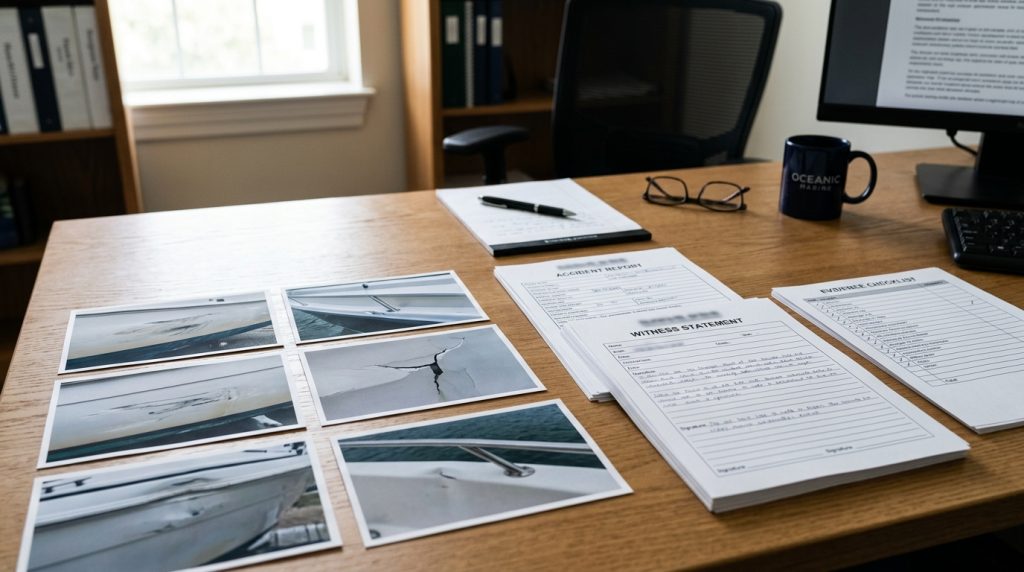
- Photos of each vessel
- Photos of collision damage
- Photos of dock or marina conditions
- Passenger statements
- Witness names and contact details
- Operator information
- Vessel owner information
- Vessel registration records
- Insurance documents
- GPS or chartplotter data
- Phone photos and videos
- Weather and water condition records
- Rental agreements
- Charter records
- Maintenance logs
- Safety equipment evidence
- Medical records
- Expert inspection findings
For broader documentation planning, readers may review how evidence for personal injury claims can help connect accident facts, injuries, responsible parties, and damages.
GPS, Video, and Digital Evidence
Digital evidence can be especially helpful after a boat collision. It may show vessel route, speed, timing, location, direction of travel, and whether the operator slowed or changed course.
Useful digital evidence may include:
- GPS tracks
- Chartplotter data
- Phone location history
- Photos with timestamps
- Videos
- Marina surveillance
- Dock camera footage
- Action camera footage
- Rental tracking data
- Emergency call records
- Text messages after the collision
Digital records should be preserved quickly because devices can be reset, footage can be overwritten, and rental systems may not keep data indefinitely.
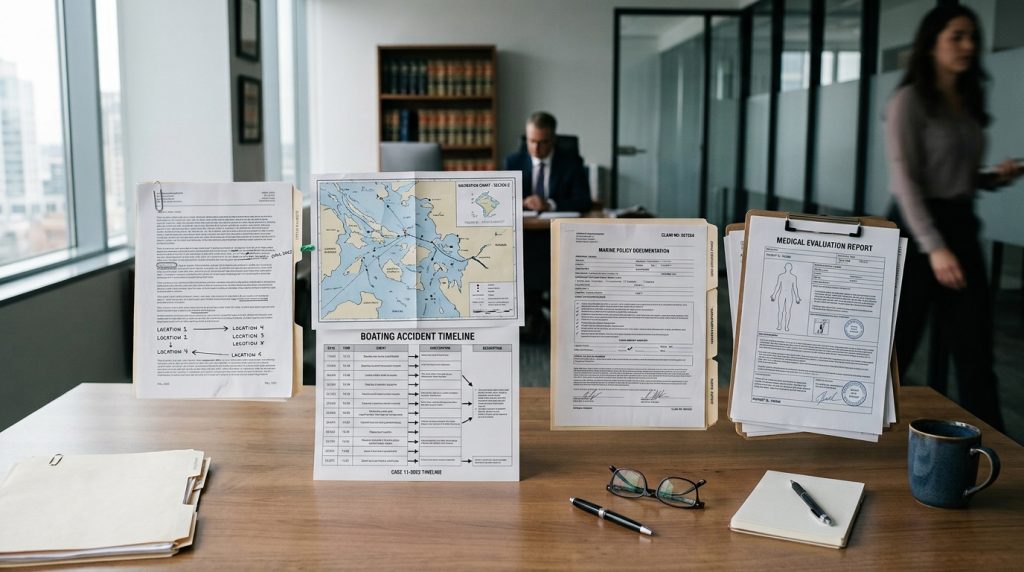
Weather, Visibility, and Water Condition Evidence
Weather and water conditions can affect fault in a collision claim. Fog, rain, glare, wind, wake, rough water, current, and darkness may all influence how a collision happened.
Important weather questions include:
- Was visibility poor?
- Was wind or current affecting vessel control?
- Was the operator traveling too fast for conditions?
- Were navigation lights working?
- Did wake or rough water contribute?
- Did the operator check marine conditions?
- Was there time to return to shore?
- Did the rental or charter company warn about conditions?
Weather evidence may include marine forecasts, phone screenshots, videos, witness statements, GPS data, accident reports, and photos from the scene.
Medical Records and Damages
Medical records are central in boat collision claims because they help show what injuries were caused by the collision and how the injuries affected the person’s life.
Important medical documentation may include:
- Emergency medical services records
- Emergency room records
- Hospital records
- Imaging reports
- Specialist notes
- Surgery records
- Physical therapy records
- Pain management records
- Prescription receipts
- Work restriction notes
- Medical bills
- Future care recommendations
Damages may include medical expenses, lost income, reduced earning capacity, pain and suffering, future care, scarring, disability, and other documented losses depending on the facts.
Insurance Coverage in Boat Collision Claims
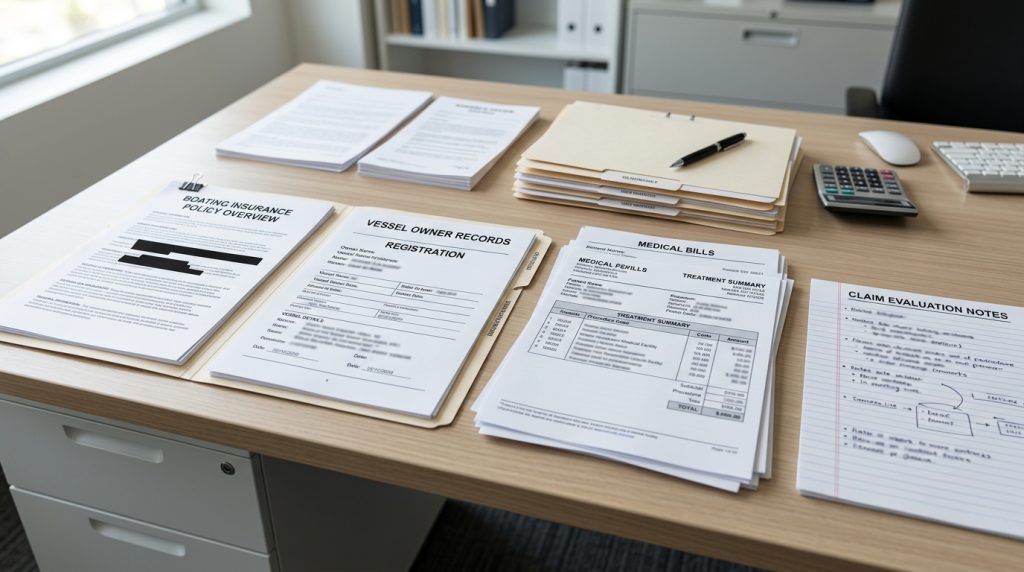
Insurance coverage may be complicated because multiple vessels and parties may be involved. A claim may require review of the operator’s coverage, vessel owner policy, rental company insurance, charter company insurance, marina coverage, homeowner’s insurance, umbrella coverage, or product liability coverage.
Potential insurance sources may include:
- Boat insurance
- Vessel owner policy
- Homeowner’s insurance
- Umbrella or excess coverage
- Rental company insurance
- Marina liability insurance
- Charter or commercial vessel coverage
- Maintenance contractor coverage
- Product liability coverage
- Public entity coverage in limited cases
Insurance companies may dispute operator permission, speed, lookout, comparative fault, intoxication, policy exclusions, commercial use, vessel condition, injury severity, and whether a specific policy applies.
Comparative Fault and Blame Arguments
Boat collision claims often involve blame-shifting. One operator may blame the other. A rental company may blame the renter. An insurer may blame a passenger, paddler, marina, weather, wake, or mechanical failure.
Common comparative fault arguments may include:
- The injured person failed to wear a life jacket.
- The operator was hard to see.
- Another vessel created the danger.
- Weather caused the collision.
- The operator acted reasonably.
- A passenger distracted the operator.
- The vessel had sudden mechanical failure.
- The rental customer ignored instructions.
- The paddler or swimmer entered an unsafe area.
These arguments do not automatically defeat a claim. The full evidence should be reviewed before accepting any fault conclusion.
Public Entity Issues
Some boat collisions involve public docks, municipal marinas, public boat launches, state parks, public vessels, public authorities, or government-controlled waterfront areas. Public entity involvement can create shorter notice requirements.
New York General Municipal Law § 50-E generally requires a notice of claim within 90 days when notice is required for certain tort claims against public corporations.
Public entity evidence may include:
- Exact accident location
- Public agency name
- Facility signage
- Incident reports
- Maintenance records
- Prior complaints
- Photos of the public dock or launch
- Witness statements
- Surveillance footage
- Weather and lighting evidence
The exact location should be documented early because public entity deadlines may arrive quickly.
Deadlines for Boat Collision Accident Claims
Deadlines depend on the claim type and responsible parties. The New York Courts statute of limitations timetable lists three years for many negligence-based personal injury claims, two years for wrongful death claims, and three years for product liability matters.
Practical deadlines may arrive sooner. Accident reporting, insurance notice, vessel repair, GPS preservation, surveillance footage, rental records, witness statements, public entity notice rules, and product inspection issues can create urgency before the lawsuit deadline.
Common Mistakes After a Boat Collision
Some mistakes can make a boat collision claim harder to prove.
Common mistakes include:
- Not getting medical care promptly
- Not reporting a qualifying boating accident
- Not identifying every operator and vessel owner
- Not collecting passenger and witness information
- Not photographing all vessels involved
- Not preserving GPS, phone, or chartplotter data
- Allowing vessel repair before inspection
- Not saving rental or charter records
- Not documenting weather and water conditions
- Not requesting marina surveillance quickly
- Throwing away damaged clothing or safety equipment
- Giving broad insurance statements before facts are clear
- Accepting a quick settlement before injuries are fully known
- Missing public entity notice deadlines
A strong claim usually depends on early reporting, preserved evidence, medical documentation, and identification of every potentially responsible party.
When Legal Guidance May Be Useful
Legal guidance may be useful when a boat collision causes serious injury, involves multiple vessels, includes a rental boat or personal watercraft, raises alcohol concerns, involves a charter vessel, happened near a public dock, involves defective equipment, or includes disputed insurance coverage.
A boat collision claim may require review of operator conduct, owner permission, vessel records, accident reports, GPS data, passenger statements, rental documents, marina records, medical records, insurance policies, public entity rules, and deadlines.
People researching local support may review a Farmingdale legal office location when looking for Long Island boating accident claim information. Publicly available personal injury case results may provide general context, although every claim depends on its own facts, evidence, injuries, insurance coverage, and applicable law.
FAQs About Boat Collision Accident Claims
Who can be liable for a boat collision in New York?
Potentially responsible parties may include a boat operator, vessel owner, rental company, charter company, marina, maintenance provider, product manufacturer, another boater, or public entity. Liability depends on operator conduct, owner permission, vessel condition, evidence, and insurance coverage.
What evidence is important after a boat collision?
Important evidence may include boating accident reports, photos, videos, witness statements, passenger accounts, operator and owner information, vessel registration, GPS data, weather records, rental documents, maintenance logs, medical records, and insurance letters.
Does a boat collision have to be reported in New York?
A written report may be required within five days after a qualifying vessel accident involving death, injury, disappearance under water, or property damage above the statutory threshold. Reporting can create an important official record.
Can a boat owner be liable if someone else was operating?
Yes, a vessel owner may be reviewed when a permitted operator negligently causes death, personal injury, or property damage. Owner liability can depend on express or implied permission, insurance, ownership, and the facts of the collision.
How long does someone have to file a boat collision claim?
The deadline depends on the claim type and responsible party. Many New York negligence-based injury claims have a three-year limitations period, but wrongful death, product liability, public entity notice, insurance notice, accident reporting, and evidence preservation issues may involve shorter timelines.
Final Thoughts
Boat collision accident claims in New York require careful investigation because fault may involve several vessels, operators, owners, rental companies, marinas, charter operators, weather conditions, mechanical issues, or insurance policies. The strongest claims usually depend on prompt medical care, accident reports, vessel information, photos, witness statements, GPS data, weather records, medical documentation, insurance review, and a clear timeline showing how the collision happened.