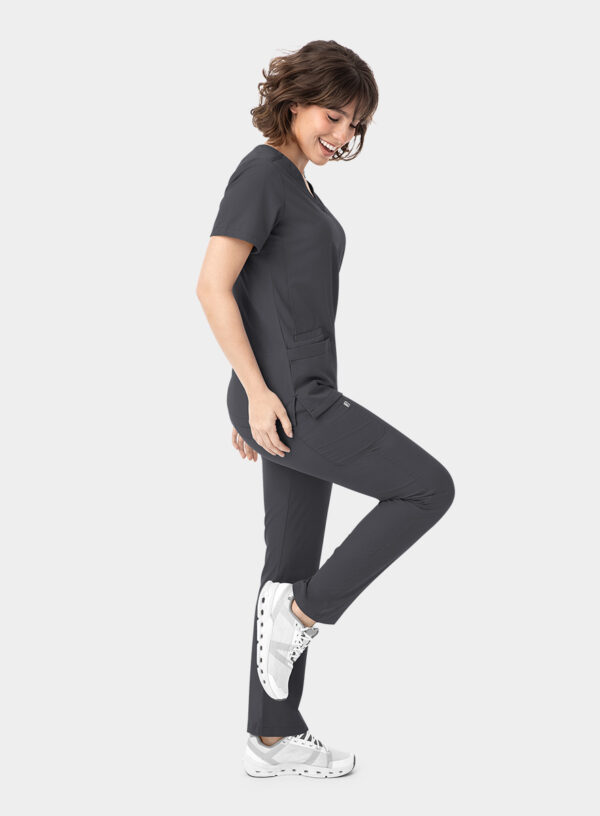
You’ve probably wondered if you can just wear yoga pants to work instead of buying legging style scrub pants. They look similar, feel comfortable, and both hug your legs.
But here’s the thing: they’re built for completely different purposes. Medical professionals need specific features that yoga pants simply don’t have, and most healthcare facilities won’t accept regular activewear as part of your uniform.
What’s the Real Difference Between These Two?
Legging-style scrub pants are medical-grade garments designed with antimicrobial fabric, reinforced stitching, and functional pockets. Yoga pants are athletic wear made for flexibility and comfort during exercise.
The fabric tells the biggest story. Scrub leggings use materials that resist bacteria and can handle repeated industrial washing at high temperatures.
A 2023 study published in the American Journal of Infection Control found that medical-grade fabrics reduced bacterial colonization by 67% compared to standard athletic wear.
Yoga pants use synthetic blends focused on stretch and sweat management, but they break down faster under hospital laundry conditions.
Pockets make another huge difference. Your yoga pants might have a small phone pocket or none at all.
Scrub leggings come with cargo pockets, side pockets, and sometimes even specialized compartments for scissors or pens.
You need somewhere to keep your badge, phone, and small medical tools without having to carry a bag everywhere.
The waistband construction also separates the two. Scrub pants feature wide, reinforced elastic that sits flat under your scrub top and doesn’t roll down during 12-hour shifts. Yoga pants often have fold-over waistbands or thin elastic that works fine for a workout, but fails when you’re bending, lifting, and moving constantly.
Do Hospitals Actually Allow Scrub Leggings?
Most healthcare facilities approve legging-style scrub pants if they meet specific criteria: opaque fabric, professional appearance, appropriate length, and brand approval. Always check your facility’s dress code first.
Dress code compliance depends on three main factors. First, the fabric must be completely opaque. Many hospitals require you to perform a squat test, where the material shouldn’t become see-through when you bend or stretch.
Second, the color needs to match your department’s uniform requirements. Third, some facilities only accept scrubs from approved medical uniform brands.
A 2022 survey by the American Nurses Association showed that 78% of hospitals now permit scrub leggings for certain roles, up from just 34% in 2018.
However, surgical staff, operating room personnel, and intensive care units often have stricter requirements that exclude leggings entirely.
Your role matters too. Medical assistants, phlebotomists, and administrative clinical staff typically have more flexibility.
Nurses in emergency departments or critical care units might face tighter restrictions.
One nurse from the Cleveland Clinic shared that her hospital allows scrub leggings for float pool nurses but requires traditional scrub pants for bedside ICU staff.
Can You Wear Yoga Pants If They Look Professional?
No, yoga pants fail dress code standards even when they look similar because they lack antimicrobial properties, appropriate opacity, and durability for medical environments.
Healthcare facilities reject yoga pants for legitimate safety reasons. The fabric doesn’t meet infection control standards. Regular athletic wear can harbor bacteria for up to 48 hours after exposure, while medical-grade fabrics are treated to resist microbial growth. Your workplace needs to minimize cross-contamination risks, and yoga pants simply don’t cut it.
The opacity issue becomes critical in patient care settings. Even expensive yoga pants often become sheer when stretched.
Patients, families, and colleagues deserve a professional environment, and see-through leggings undermine that standard. Medical scrub leggings undergo specific testing to ensure they remain opaque under all conditions.
Durability affects your wallet, too. Yoga pants might cost $50-80 and last six months with regular wear.
Scrub leggings cost about the same but survive two to three years of industrial washing. The specialized fabric doesn’t pill, fade, or lose elasticity as quickly as standard activewear.
What Features Should You Look for Instead?
Choose scrub leggings with moisture-wicking polyester blends (60-70%), reinforced knee panels, an antimicrobial coating, multiple functional pockets, and mid- to high-rise waistbands.
The fabric composition matters most. Look for polyester-spandex blends ranging from 92% polyester and 8% spandex to 72% polyester, 21% rayon, and 7% spandex.
These ratios provide stretch without sacrificing structure. Some brands add rayon for softness, but keep it under 25% to maintain durability.
Knee reinforcement significantly extends the life of your scrubs. Your knees take the most stress when you kneel beside beds, crouch to reach supplies, or sit in rolling chairs.
Double-layer fabric or reinforced stitching in this area prevents holes and thinning.
Antimicrobial treatments come in two types: chemical coatings applied during manufacturing and fabrics with inherent antimicrobial properties like silver-infused threads.
Chemical treatments fade after 50-75 washes, while silver-treated fabrics maintain effectiveness for the garment’s lifetime. This feature reduces odor and bacterial growth during long shifts.
Pocket placement affects your workflow. Side cargo pockets should sit below your hip bone but above your knee for easy access without interfering when you sit. Internal waistband pockets work well for your ID badge or locker key. Avoid leggings with back pockets, as they create bulk under your scrub top and make sitting uncomfortable.
How Much Do Quality Scrub Leggings Cost?
Professional-grade legging-style scrub pants range from $28 to $ 65 per pair, with mid-range options ($35- $ 45) offering the best balance of quality and value.
Budget options under $30 exist but usually lack antimicrobial properties and wear out within eight to 12 months.
You’ll find these at general uniform stores or online marketplaces. They work if you’re a student or trying on scrub leggings for the first time, but don’t expect them to last through intense daily use.
Mid-range scrubs ($35-45) give you the features you actually need without paying for brand prestige.
These typically include antimicrobial fabric, reinforced construction, functional pockets, and good color retention. Most healthcare workers find that this price point offers the best value for regular wear.
Premium options ($50-65) come from established medical uniform brands with specialized features like moisture-wicking technology, four-way stretch, or patented fabric blends.
You’re paying partly for the brand name, but also for refined fit and extended warranties. Some companies offer free replacements if the seams fail within the first year.
Buying multiple pairs upfront costs more initially but saves money long-term.
Three to five pairs let you rotate them properly, reducing wear and extending each pair’s lifespan. You can wash them less frequently per item while still having clean scrubs for each shift.
Do scrub leggings pill after washing?
Quality scrub leggings resist pilling when washed in cold water and air-dried, but cheap versions pill within 10-15 washes regardless of care method.
Can men wear legging style scrub pants?
Yes, many brands make unisex or men’s specific scrub leggings with adjusted sizing and pocket placement for different body types.
Are fleece-lined scrub leggings allowed?
Some facilities permit them during winter months, but verify with your dress code because the extra thickness might violate uniform standards.
How often should you replace scrub leggings?
Replace them every 18-24 months with regular use or sooner if you notice thinning fabric, fading, or loss of elasticity.
Do black scrub leggings show stains more than other colors?
Black hides most stains better than lighter colors, but certain substances like bleach or iodine create visible discoloration on any dark fabric.
Legging-style scrub pants are purpose-built medical garments that meet professional standards yoga pants can’t match.
They cost roughly the same but deliver antimicrobial protection, better durability, and workplace compliance.
When you’re choosing what to wear for your healthcare job, invest in actual medical scrubs instead of trying to make athletic wear work.